
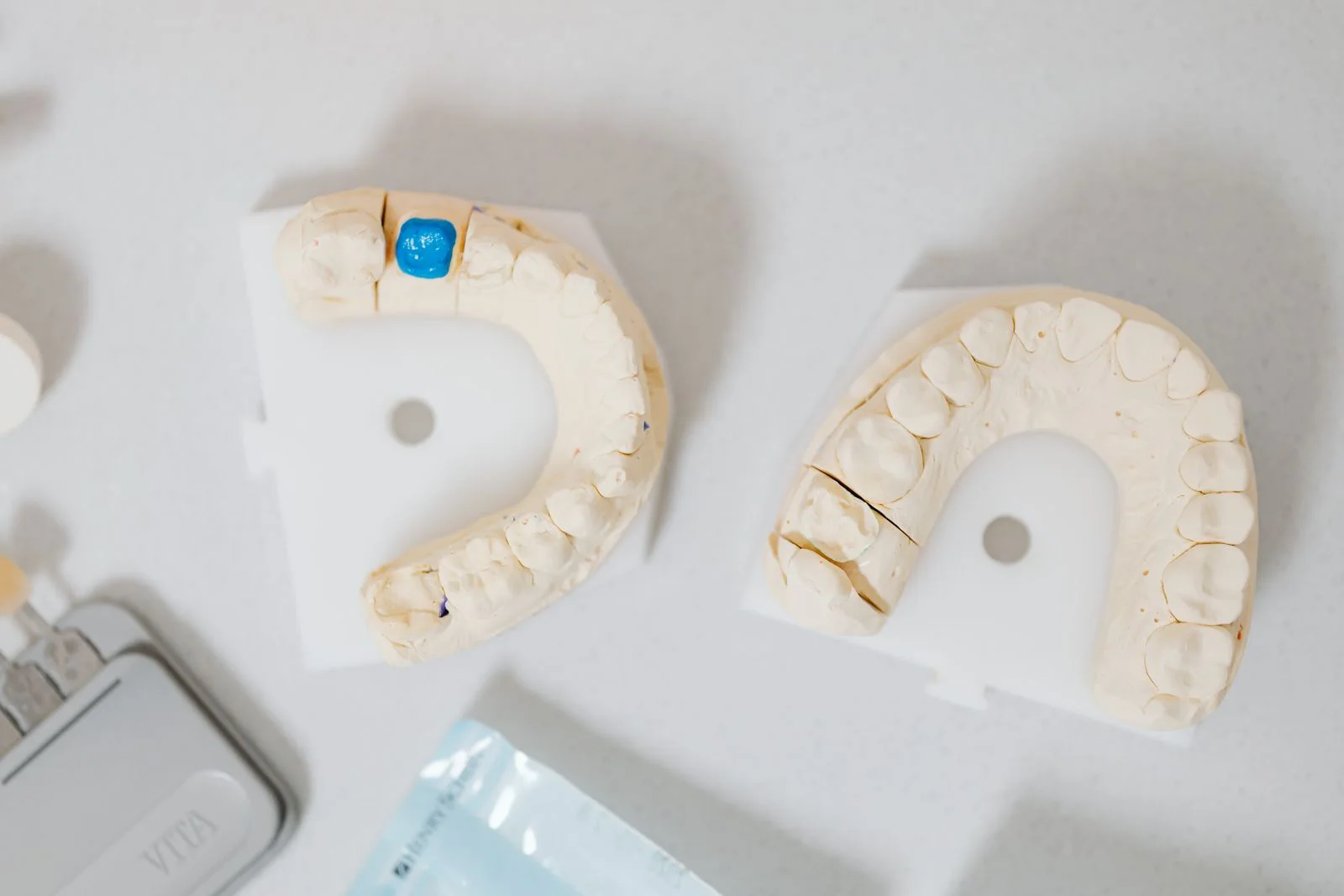
Stock photograph for illustration; not a participating clinic, practitioner, patient or treatment result. Photo: Kaboompics / Pexels.
Going into an adult orthodontic consultation knowing what to ask helps you use the appointment time well, compare information across providers meaningfully, and understand what a written treatment plan should contain before you commit to anything.
Why preparation matters more for adults
Adult orthodontic treatment involves considerations that rarely come up for teenagers — existing restorations such as crowns or bridges, greater bone density, the possibility of gum disease, and practical concerns about appearance at work. The Australian Society of Orthodontists notes that adult patients often have more complex dental histories that influence treatment planning. Coming prepared with written questions lets you direct the conversation toward your specific situation rather than relying on a standard script from the practice.
Healthdirect Australia recommends writing questions down before any health appointment and asking for explanations in plain language if clinical terminology is confusing. That principle applies just as well to orthodontic consultations as to GP visits.
The practitioner’s registration and scope
Orthodontists are registered dental specialists; general dentists may also provide some orthodontic treatment, as the Australian Dental Association confirms. The scope and depth of that training differ, so a reasonable first question is whether the person who conducts your assessment is an orthodontist or a general dentist, and what that means for the complexity of cases they routinely treat.
Ahpra and the National Boards maintain a public register of dental practitioners, including specialist registration. You can check the individual practitioner’s registration — not just the business name — before or after your consultation. That is a standard due-diligence step, not a reflection on any particular practice.
Questions about the assessment itself
An initial consultation should involve more than a visual look. Ask what records will be taken at this visit or at a separate records appointment. Common records include clinical photographs, X-rays and sometimes digital scans or study models. Understanding what is included in any initial fee — and what attracts a separate charge — prevents surprises.
Useful questions at this stage:
- What records do you take, and are they included in today’s fee?
- Will the same practitioner who does the records also plan and carry out my treatment?
- How long does the assessment take, and when will I receive a written plan?
Questions about appliance options
The Australian Society of Orthodontists treatment comparison document names four broad appliance categories used in orthodontics: metal braces, ceramic braces, lingual braces and clear aligners. Each has different characteristics relating to visibility, cleaning requirements and the types of tooth movement involved. The comparison document does not establish which category suits any particular individual — that judgement belongs to the treating practitioner after a full assessment.
What you can reasonably ask the practitioner:
- Which appliance types could potentially address my concern, and what are the differences between them for my situation?
- Are there concerns or limitations with my teeth or bite that would rule out any of these options?
- If more than one option is clinically workable, what factors should I weigh in choosing between them?
The ADA notes that a dentist or orthodontist advises on individual suitability for clear aligners — this is not something a consumer can self-assess from online information alone.
Questions about the cost quote
The Australian Society of Orthodontists cost checklist prompts patients to ask specific questions about what a quote does and does not cover. Before you compare quotes from different providers, make sure you are comparing the same inclusions. Items worth confirming explicitly:
- Is the initial assessment fee included in or separate from the overall treatment fee?
- Are diagnostic records (X-rays, scans, photographs) included?
- How many adjustment or review visits are covered?
- What happens if treatment takes longer than estimated — is there an additional charge?
- Are retainers included at the end of active treatment, and if so, what type and how many?
- What is the cost of replacement retainers if one is lost or broken?
This checklist approach is hypothetical in the sense that inclusions vary between practices; it is a prompt for your own questions, not a claim that every practice handles these items the same way.
Questions about your specific dental situation
Adults are more likely than adolescents to have existing dental work, missing teeth, or history of gum problems. Ask directly:
- Do I need to see my general dentist or a periodontist before orthodontic treatment can begin?
- How will existing crowns, implants or missing teeth affect the plan?
- What monitoring will occur during treatment for gum health?
These questions do not require you to have a diagnosis already — they signal to the practitioner that you understand your dental history may be relevant, and they open the conversation.
Questions about the written plan
Before you agree to treatment, ask for a written treatment plan that covers the proposed appliance, the estimated duration, the fee structure with payment options, and the retention phase. The retention phase — keeping teeth in position after active treatment ends — is a long-term commitment. Our related guides on retainers after orthodontic treatment, fixed and removable retainer options and retainer replacement preparation cover the questions worth asking specifically about that stage.
A written plan also lets you review the information at home after the appointment, rather than making a decision under time pressure in the chair.
What to do with the information you gather
After one or more consultations, you will have records, written plans and quotes to compare. The comparison is most useful when you focus on what is clinically proposed for your specific situation, not simply on the headline price or the brand of aligner system mentioned. If any aspect of the written plan is unclear, contacting the practice to ask a follow-up question before signing a financial agreement is entirely reasonable.
If you are ready to begin the process of connecting with an orthodontic provider in Adelaide, you can submit an adult orthodontic consultation enquiry, or browse enquiries specifically for braces or clear aligners depending on what you would like to explore.
Further reading
- Australian Society of Orthodontists — Adults and Orthodontics eBook
- Australian Society of Orthodontists — Treatment Comparison Table
- Australian Dental Association — Teeth Straightening and Braces
- Healthdirect Australia — Questions to ask your doctor
- Ahpra — Registers of Practitioners
Sources and further reading
- Australian Dental Association — teeth straightening and braces
- Professional dental information — ASO_Treatment Comparison_Table_A4_V24.pdf
- Professional dental information — 2019 09 OA Orthodontics Checklist A4 concepts_v2.pdf
- healthdirect Australia — questions to ask your doctor
- Ahpra practitioner information — Professions and Divisions.aspx
Source links provide background, not an endorsement or clinical review of this page. Read our editorial approach.