
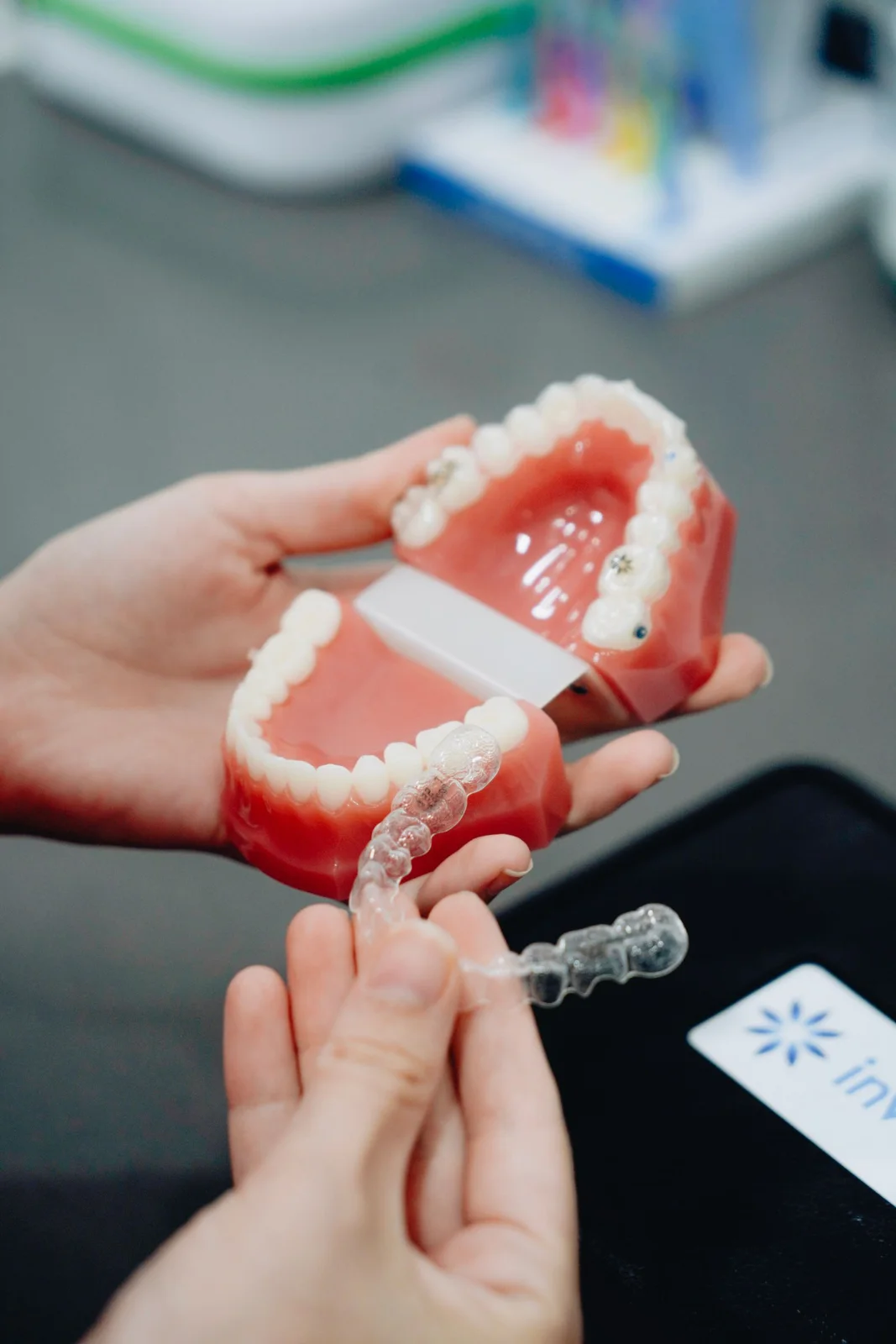
Stock photograph for illustration; not a participating clinic, practitioner, patient or treatment result. Photo: Beyza Kaplan / Pexels.
Both fixed and removable retainers hold teeth in position after orthodontic treatment ends. Fixed retainers bond to the inner surface of teeth; removable retainers come out for eating and cleaning. Neither type is universally superior — the right choice depends on factors only your treating orthodontist or dentist can assess in person. This guide focuses specifically on the comparison between the two types and helps you prepare useful questions about that decision.
For a broader explanation of why retainers are prescribed and what general retention follow-up involves, see our Retainers after orthodontic treatment questions guide.
Compare the proposed arrangement, not just its label
Ask the practitioner to show you what they mean by a fixed retainer and by a removable retainer. In a general discussion, fixed describes an appliance attached to teeth, while removable describes an appliance that the wearer can take out. Those labels do not explain which arrangement is appropriate for your mouth, which teeth are involved, or what instructions you would receive.
Make a two-column note headed “fixed option discussed” and “removable option discussed”. Leave each column blank until the practitioner explains the actual proposal. Record which teeth or arch they are discussing, the appliance name, and whether a combination is proposed. This avoids comparing an unspecified fixed option with a very specific removable one.
Compare everyday responsibilities as questions
Do not choose from general claims that one type is easier, stronger or more reliable. Ask how the proposed options would affect your own daily routine:
- What cleaning instruction and demonstration would I receive for each option?
- For a removable option, who sets my wear schedule and how would it be explained in writing?
- For a fixed option, how would you explain checks for the attached appliance and whom should I contact with a concern?
- Would either proposal have implications for activities or dental work I should discuss with you?
- If I find the proposed routine difficult, when and how should I ask for a review?
These questions seek an individual explanation. They do not supply a wear schedule, cleaning technique or self-assessment test. If you already have an appliance that feels different or seems damaged, describe that to your treating practice and request advice rather than deciding from this comparison that it is safe to continue unchanged.
Keep suitability separate from preference
You may have a preference about a removable or attached appliance, but ask how that preference fits with the practitioner’s assessment. A comparison chart on a website cannot examine your teeth, bite or treatment history. Nor should a general comparison be treated as a promise that both options will be offered to you.
Ask the practitioner to identify the reasons for their proposed retention arrangement and any alternatives they consider appropriate. Useful distinctions to record include “my preference”, “practitioner’s assessment” and “point still to be clarified”. Keeping those separate helps you see where a decision rests on clinical advice and where your practical preferences can be discussed.
A comparison record to take away
A useful comparison can be short and specific. Instead of collecting general advantages and disadvantages from several websites, ask for an explanation of the options actually discussed at your appointment.
| Point to record | Fixed proposal | Removable proposal |
|---|---|---|
| Actual appliance and teeth involved | Ask the practitioner | Ask the practitioner |
| Reason it is being discussed for you | Request an individual explanation | Request an individual explanation |
| Daily responsibilities | Ask for a demonstration or written instructions | Ask for a demonstration or written instructions |
| Review arrangements | Confirm who checks it and when | Confirm who checks it and when |
| Concern or damage contact | Record the practice’s contact process | Record the practice’s contact process |
| Cost information | Request a written scope | Request a written scope |
If only one option is clinically appropriate, the second column can simply say “not proposed; reason explained by practitioner”. The purpose is understanding a recommendation, not forcing an artificial choice.
Questions to prepare before your consultation
Healthdirect Australia recommends bringing a written list of questions to appointments and asking for explanations in plain language if anything is unclear. The following is a framework for the fixed-vs-removable conversation specifically — not a clinical checklist.
About the recommendation itself
- Why is this type of retainer being suggested for my specific situation?
- Are there clinical reasons a combined approach — fixed on one arch, removable on the other — might be appropriate for me?
- What are the main risks if I choose one type over the other given my bite and history?
About daily life and maintenance
- What cleaning routine does this retainer require, and how does that differ between fixed and removable options?
- What changes or concerns should prompt me to contact the practice, and what should I tell them?
- Are there foods or habits that affect each type differently?
About cost and long-term planning
- Is the first retainer included in the overall treatment fee, or billed separately?
- What is the replacement cost if a removable retainer is lost or damaged?
- How frequently should each type be professionally checked?
The Australian Society of Orthodontists cost checklist prompts patients to ask whether post-treatment retainers and replacement retainers are included in quoted fees — confirming that these are entirely reasonable questions to raise at the outset, not afterthoughts.
Checking your practitioner’s registration
Orthodontists are registered dental specialists in Australia. The Australian Dental Association notes that dentists who specialise in this area are called orthodontists, and that many general dentists also perform orthodontic treatment. Ahpra and the relevant National Board maintain public registers of all registered health practitioners, including dental specialists, searchable by name. Checking the specific practitioner’s name — rather than just a business name — is the recommended approach.
This referral site is not a treating practice and does not endorse any individual provider.
Preparing for your Adelaide consultation
If you are exploring orthodontic options in Adelaide and want to understand retention planning in context, the most useful step is an in-person assessment with a registered practitioner who can review your teeth, bite and treatment history.
You can combine this guide with our Adult orthodontic consultation questions guide to build a broader question list before you attend. If you are specifically thinking about replacing an existing retainer, our Retainer replacement consultation preparation guide covers what to bring and what to ask. When you are ready to request a referral enquiry, see our Adult Orthodontic Consultation Enquiries page.
Further reading
- Australian Society of Orthodontists – Treatment Comparison Table
- Australian Society of Orthodontists – Adults and Orthodontics eBook
- Australian Dental Association – Teeth straightening and braces
- Healthdirect Australia – Questions to ask your doctor
- Ahpra – Registers of Practitioners
Sources and further reading
- Professional dental information — 2019 09 OA Orthodontics Checklist A4 concepts_v2.pdf
- Professional dental information — ASO_Treatment Comparison_Table_A4_V24.pdf
- healthdirect Australia — questions to ask your doctor
- Ahpra practitioner information — Professions and Divisions.aspx
- Australian Dental Association — teeth straightening and braces
Source links provide background, not an endorsement or clinical review of this page. Read our editorial approach.