
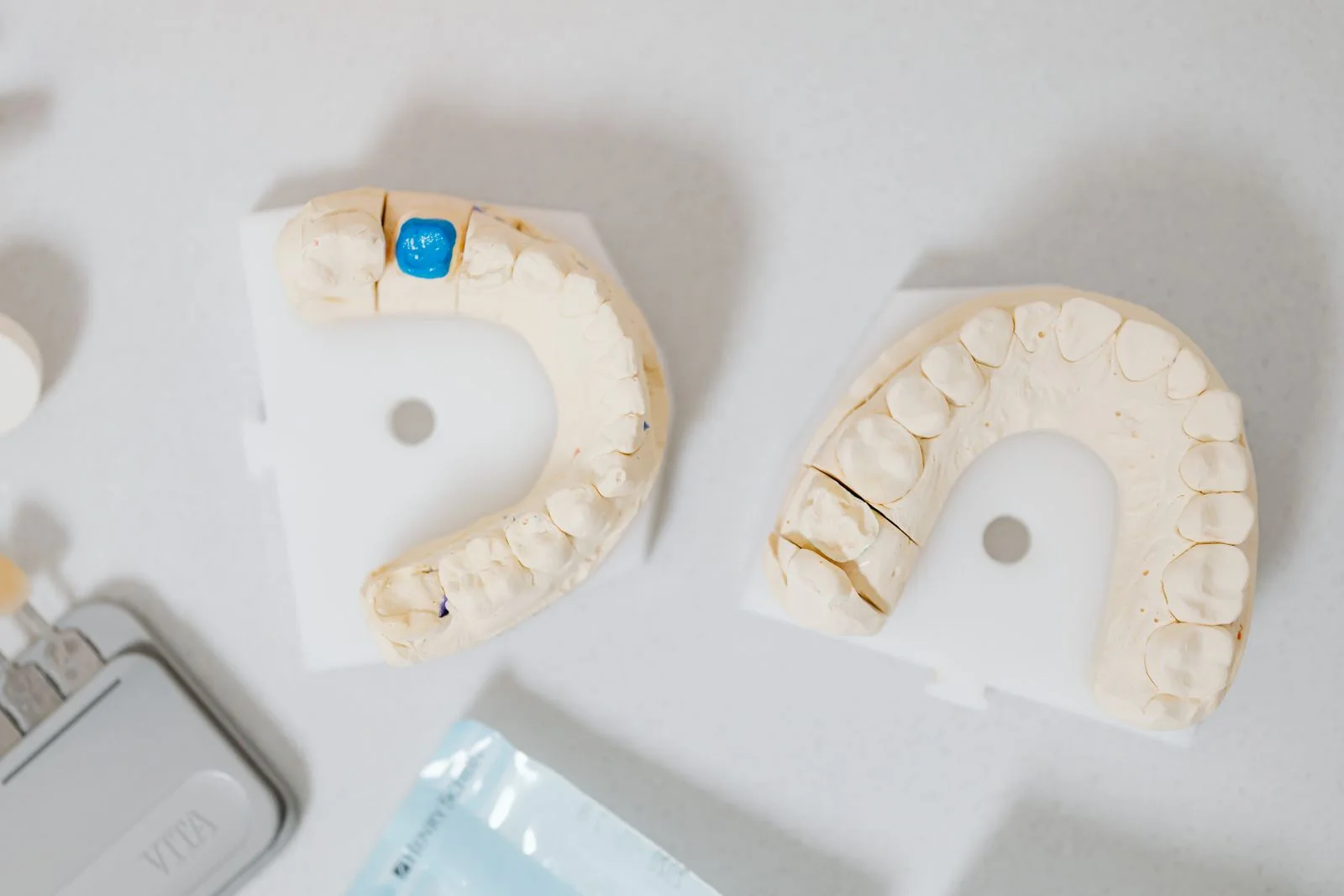
Stock photograph for illustration; not a participating clinic, practitioner, patient or treatment result. Photo: Kaboompics / Pexels.
Before your first orthodontic appointment, knowing which food and appliance care questions to raise with your practitioner makes the visit far more productive. Each orthodontic appliance — metal braces, ceramic braces, lingual braces or clear aligners — carries its own day-to-day care requirements, and the only person qualified to give you personalised guidance is the registered practitioner treating you.
Why food and care questions matter before you start
Orthodontic treatment typically spans many months, so the habits you establish in the first few weeks become your routine for the entire period. If you begin treatment without a clear picture of what you can eat, how to clean around brackets and wires, or what counts as an appliance emergency, small uncertainties can compound into avoidable breakages or hygiene problems.
Bringing a written list of food and care questions to your consultation means you leave with specific, appliance-matched instructions rather than vague generalisations from online sources. Healthdirect Australia recommends writing questions down before appointments and asking your health professional to explain anything that isn’t immediately clear — a straightforward habit that is easy to overlook when you’re absorbing a lot of new information at once.
Ask for written instructions you can take home
Verbal instructions during an appointment are easy to misremember, especially when you’re also processing cost information, appointment schedules and consent forms. Ask your practitioner specifically:
- Can I have a written care sheet for my appliance type? Instructions for metal brackets differ from those for ceramic brackets or clear aligners.
- Who do I contact if something breaks on a weekend? Knowing the after-hours process in advance prevents panic if a wire comes loose.
- What counts as urgent versus something that can wait until my next scheduled visit?
Written instructions also give you something concrete to revisit when memory fades, which it will.
Clarify appliance-specific advice — not all braces are the same
The Australian Society of Orthodontists identifies metal braces, ceramic braces, lingual braces and clear aligners as distinct appliance categories, each with different materials and placements. This matters for food and care because the guidance your practitioner gives you should correspond to what is actually in or on your teeth.
For example, ceramic brackets are made from tooth-coloured or clear materials. Some patients want to know whether certain foods or drinks could affect bracket appearance over time — this is a reasonable appliance-specific question to raise. Lingual braces sit on the inside surface of teeth, which creates different cleaning challenges compared with labial (front-surface) brackets. Clear aligners are removable, which introduces an entirely different set of questions around when to remove them, how to clean the trays and what happens if you eat or drink while wearing them.
Useful appliance-specific questions to bring to your appointment:
- What foods are most likely to damage or dislodge this particular appliance?
- Are there cleaning tools you recommend for this bracket or aligner type?
- How does hard, sticky or crunchy food affect this appliance differently from others?
- If I have a ceramic bracket, are there specific staining risks I should know about?
- For clear aligners: what can I drink while wearing the trays?
No one-size-fits-all restrictions: understanding why lists vary
You may notice that food restriction lists differ across websites, pamphlets and social media. This is partly because different appliances genuinely do have different risk profiles, and partly because individual bite patterns, bracket placement and wire stages can all influence what is considered risky for a particular patient at a particular point in treatment.
A practitioner managing your case in person can account for these variables. A website, including this one, cannot. What you can do is use broadly understood categories as the starting point for a targeted conversation:
Foods commonly discussed in the context of fixed appliances (ask your practitioner how these apply to yours):
| Category | Why it’s often discussed | Your question |
|---|---|---|
| Hard foods (raw carrots, crusty bread, nuts) | Potential bracket or wire force | How should I modify preparation rather than avoid entirely? |
| Sticky foods (caramel, chewing gum) | Adhesion to brackets | Is this a complete avoidance, or technique-dependent? |
| Chewy foods (dense bread, dried fruit) | Prolonged pressure on brackets | Does this apply throughout treatment or just in certain wire stages? |
| Sugary or acidic drinks | Increased decay risk around brackets | What does your practice recommend for home fluoride use? |
This table is a hypothetical preparation framework — not a clinical protocol — intended to help you structure questions rather than to serve as dietary advice.
Questions about cleaning tools and technique
Brushes, interdental brushes, water flossers and floss threaders are commonly discussed alongside fixed appliance treatment, but which combination is appropriate and how to use each tool correctly is something your practitioner should demonstrate or describe in the context of your specific appliance. Questions worth raising:
- What tools does your practice recommend for cleaning around my bracket type?
- Can someone show me the technique before I leave today?
- How often should I be checking that brackets are still securely bonded?
- When should I call versus simply waiting for my scheduled appointment?
Questions about retainers and what happens after active treatment
The Australian Society of Orthodontists cost checklist prompts patients to ask about retainers and replacement retainers — a detail that is easy to overlook when focusing only on the active treatment phase. Retainers also come with their own food and care considerations, particularly if they are removable. Add these to your list:
- What type of retainer will I likely receive at the end of treatment?
- Are there food or drink restrictions specific to that retainer type?
- What is the cleaning routine for the retainer?
- What happens if the retainer is lost or damaged?
Verifying your practitioner’s registration
Orthodontists are registered dental specialists. General dentists with appropriate training may also provide some orthodontic treatment. Regardless of who you see, the Australian Health Practitioner Regulation Agency (Ahpra) maintains a public register where you can verify an individual practitioner’s registration and specialty status. Check the register using the practitioner’s name rather than a business name alone.
Preparing for your consultation
Bringing a written list of food and care questions is one of the most practical things you can do before an orthodontic consultation. Pair your questions with the broader preparation covered in our guide to first orthodontic consultation preparation and read about orthodontist and dentist roles so you understand who is answering your questions and in what capacity.
If you’re ready to find a practitioner in Adelaide to put these questions to in person, you can submit a braces consultation enquiry, a clear aligner consultation enquiry or an adult orthodontic consultation enquiry through this site.
Further reading
- Australian Society of Orthodontists – Treatment Comparison: https://orthodonticsaustralia.org.au/wp-content/uploads/2020/01/ASO_Treatment-Comparison_Table_A4_V24.pdf
- Australian Society of Orthodontists – Patient Checklist: https://orthodonticsaustralia.org.au/wp-content/uploads/2019/11/2019-09-OA-Orthodontics-Checklist-A4-concepts_v2.pdf
- Australian Dental Association – Teeth Straightening and Braces: https://teeth.org.au/teeth-straightening-and-braces
- Healthdirect Australia – Questions to ask your doctor: https://www.healthdirect.gov.au/healthcare-and-services/general-health/questions-to-ask-your-doctor
- Ahpra Practitioner Register: https://www.ahpra.gov.au/Registration/Registers-of-Practitioners/Professions-and-Divisions.aspx
Sources and further reading
- healthdirect Australia — questions to ask your doctor
- Professional dental information — ASO_Treatment Comparison_Table_A4_V24.pdf
- Professional dental information — 2019 09 OA Orthodontics Checklist A4 concepts_v2.pdf
- Australian Dental Association — teeth straightening and braces
- Ahpra practitioner information — Professions and Divisions.aspx
Source links provide background, not an endorsement or clinical review of this page. Read our editorial approach.