
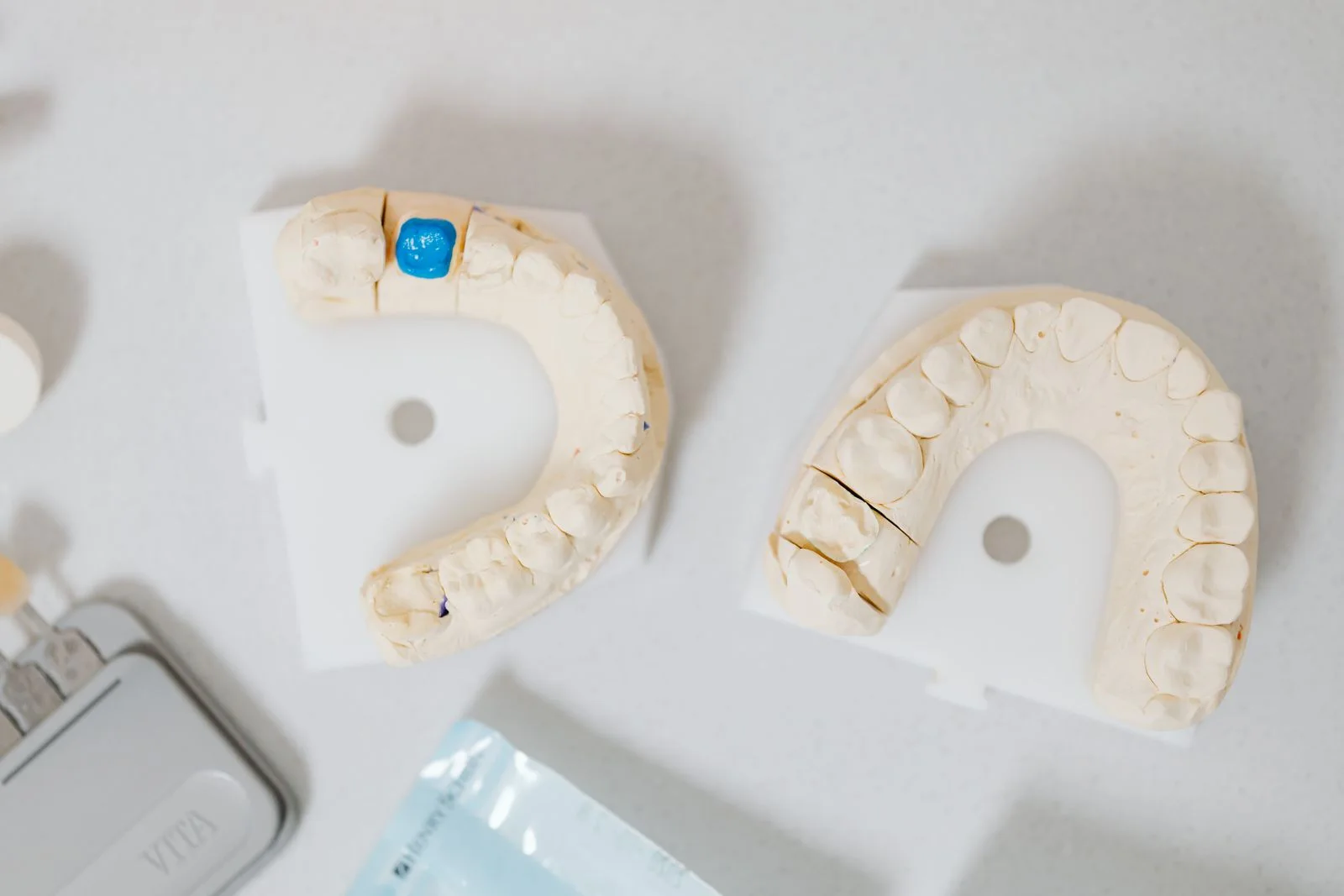
Stock photograph for illustration; not a participating clinic, practitioner, patient or treatment result. Photo: Kaboompics / Pexels.
An orthodontic consultation is your opportunity to gather information from a registered practitioner about teeth and bite alignment. Walking in prepared — with written questions, a rough dental history, and a clear sense of what you want to understand — helps you use the appointment time well and leave with answers you can actually act on.
What the consultation is actually for
An initial orthodontic consultation is primarily an information-gathering session for both you and the practitioner. The orthodontist or dentist reviews your teeth, jaw and bite, and you have the chance to ask questions about treatment categories, the assessment process, and what a written plan would involve. It is not the moment a final treatment decision must be made, and you are under no obligation to commit on the day.
Orthodontics concerns the alignment of teeth and the bite. Treatment options the Australian Society of Orthodontists identifies by category include metal braces, ceramic braces, lingual braces and clear aligners — each with different characteristics that a practitioner explains in relation to your specific situation. Which category, if any, is appropriate is a clinical judgement made by the treating practitioner, not a referral website.
See also: What orthodontics means before a consultation
Who you are likely to see
Orthodontic treatment may be provided by an orthodontist (a dental specialist with additional postgraduate training in orthodontics) or by a general dentist who offers some orthodontic services. Both are registered with Ahpra. The Australian Dental Association notes that orthodontists are dental specialists; general dentists may also provide certain orthodontic treatment.
Before the appointment, you can search the Ahpra public register by the practitioner’s name to confirm current registration and any specialist endorsement. Search by the individual’s name rather than the business or clinic name, as registration is personal to the practitioner.
See also: Orthodontist and dentist roles questions to ask
Preparing your dental history
Bringing a brief, honest dental history saves time and helps the practitioner build an accurate picture. Useful things to note before you arrive:
- Previous orthodontic treatment — braces, retainers or aligners, and roughly when
- Recent dental work — extractions, implants, crowns, bridges or ongoing treatment
- Current dental concerns — anything your general dentist is monitoring
- Medications — some affect gum health and bone; the practitioner needs to know
- Health conditions — particularly anything affecting bone density, healing or immune response
- Your general dentist’s contact — the treating orthodontist may wish to liaise
If you have recent X-rays or scans from your general dentist, ask whether the consulting practice wants you to bring copies or whether they will take their own records. See: Orthodontic scans and impressions questions
Writing down your questions in advance
Healthdirect Australia suggests writing down questions before any healthcare appointment and asking for explanations in plain language if clinical terms are unclear. The same logic applies here. Consider grouping questions into three areas:
About your situation
- What alignment or bite issues are present?
- Are there any concerns the practitioner wants to investigate further before recommending a direction?
- Is a referral to another specialist (for example, a periodontist for gum health) recommended first?
About treatment categories
- Which appliance categories might be relevant to my situation and why?
- What are the differences between those categories in terms of how they work?
- Are there any situations where one category is not suitable?
About the process
- What records or assessments happen before a written plan is prepared?
- How many appointments are typical during active treatment?
- What is involved in retention after active treatment ends, and for how long?
Questions to ask about the quote
The Australian Society of Orthodontists publishes a cost checklist that prompts patients to ask specific questions about what is and is not included in a quoted fee. Before accepting any figure as a final cost, it is worth asking:
- Does the quote include initial records (X-rays, photographs, scans or impressions)?
- Are all routine adjustment or check appointments included?
- What happens if an appliance breaks or is lost — is repair or replacement an additional cost?
- Are retainers included, and if so, how many sets?
- What is the cost of replacement retainers?
- Is there a separate fee if treatment takes longer than the estimated timeframe?
- What payment or instalment options are available?
Hypothetical scenario (illustrative, not a customer story): Imagine two people attending the same practice on the same day for the same treatment category. One asks all the questions above and discovers retainers are charged separately; the other does not ask and is surprised by the additional cost at the end of active treatment. The difference is preparation, not luck.
See also: Orthodontic assessment and records questions
What the appointment scope typically covers
A first consultation generally involves a visual examination of the teeth and bite, a conversation about your concerns and goals, a discussion of possible treatment directions, and an explanation of next steps — which may include taking records before a formal treatment plan is prepared. Some practices provide a written summary or quote at the consultation; others provide it after a separate records appointment.
The consultation does not usually result in any active treatment starting on the day. It is an assessment and information session. If the practitioner recommends records before giving a quote, that is clinically normal — a written plan based on thorough records is more reliable than one given on a visual check alone.
For adults specifically, the Australian Society of Orthodontists notes that adult orthodontics involves considerations that differ from childhood treatment, including gum and bone health, existing restorations, and the possibility of combined treatment with other dental specialists. Adults attending a consultation may find it useful to flag any existing dental work and ask how it interacts with treatment planning.
Services you can enquire about through this site: Braces Consultation Enquiries · Clear Aligner Consultation Enquiries · Adult Orthodontic Consultation Enquiries
Keeping notes during and after the appointment
Take a notepad or use your phone to jot down what the practitioner says during the appointment. It is easy to forget details once you are back in the car park. Note the names of any treatment categories mentioned, any conditions the practitioner flags, the next recommended step, and any timeframe discussed. If something is unclear, ask for clarification before you leave — healthdirect Australia specifically recommends asking for things to be explained in language you understand.
After the appointment, review your notes against your original question list. If you realise something was left unanswered, ask the practice how to send a follow-up question before deciding on next steps.
Further reading
- Australian Society of Orthodontists — Treatment Comparison Table: https://orthodonticsaustralia.org.au/wp-content/uploads/2020/01/ASO_Treatment-Comparison_Table_A4_V24.pdf
- Australian Society of Orthodontists — Orthodontics Cost Checklist: https://orthodonticsaustralia.org.au/wp-content/uploads/2019/11/2019-09-OA-Orthodontics-Checklist-A4-concepts_v2.pdf
- Australian Dental Association — Teeth Straightening and Braces: https://teeth.org.au/teeth-straightening-and-braces
- Healthdirect Australia — Questions to Ask Your Doctor: https://www.healthdirect.gov.au/healthcare-and-services/general-health/questions-to-ask-your-doctor
- Ahpra Practitioner Register: https://www.ahpra.gov.au/Registration/Registers-of-Practitioners/Professions-and-Divisions.aspx
Sources and further reading
- Professional dental information — ASO_Treatment Comparison_Table_A4_V24.pdf
- Australian Dental Association — teeth straightening and braces
- Professional dental information — 2019 09 OA Orthodontics Checklist A4 concepts_v2.pdf
- healthdirect Australia — questions to ask your doctor
- Ahpra practitioner information — Professions and Divisions.aspx
Source links provide background, not an endorsement or clinical review of this page. Read our editorial approach.