
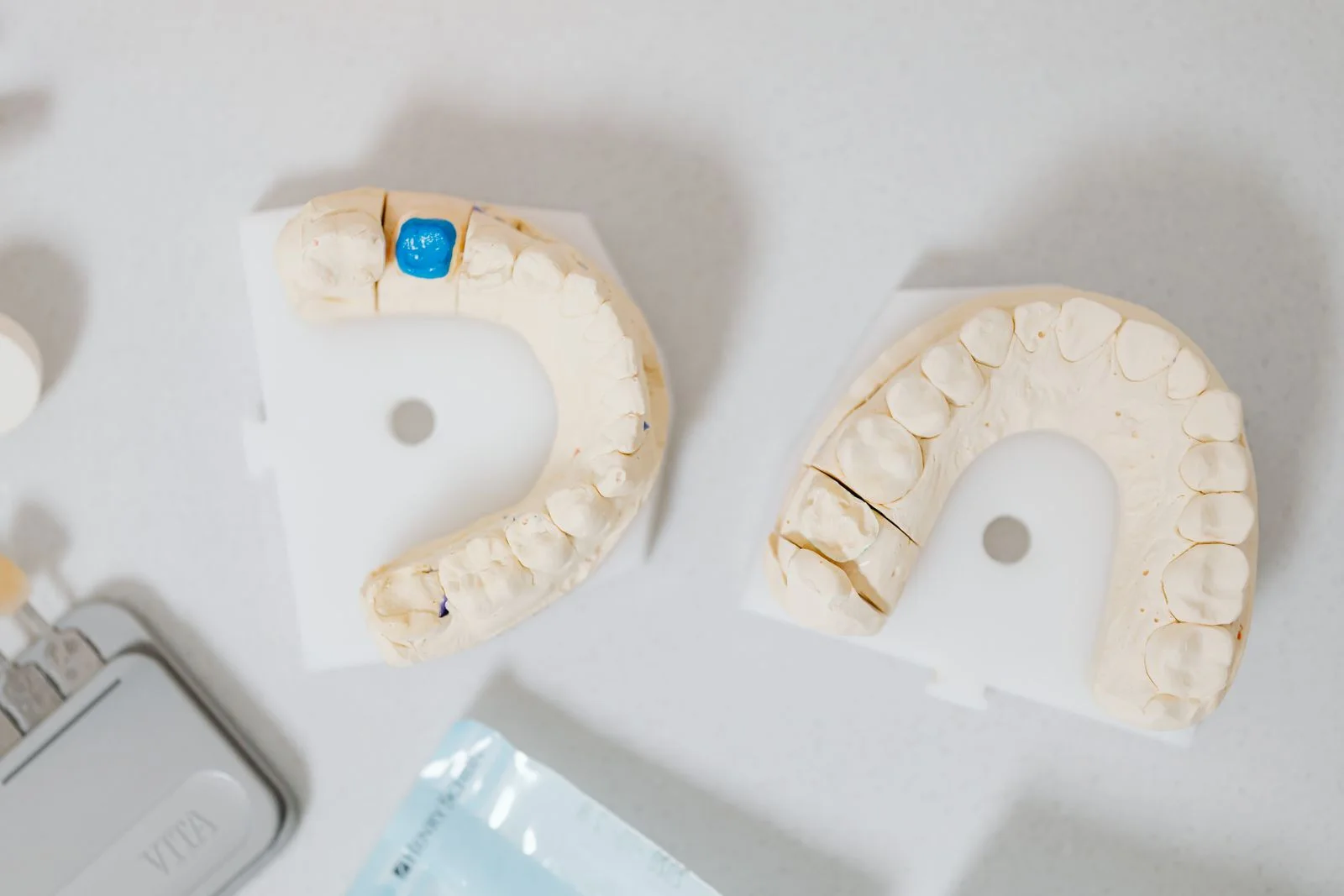
Stock photograph for illustration; not a participating clinic, practitioner, patient or treatment result. Photo: Kaboompics / Pexels.
The short answer: different registration, different scope
An orthodontist is a dental specialist — a registered dentist who completed additional postgraduate specialist training in teeth and bite alignment. A general dentist is also a registered dental practitioner, but without that specialist qualification. Both can provide some orthodontic treatment in Australia, but their training depth and registration categories differ. Knowing this distinction helps you ask sharper questions before any consultation.
Registration categories in Australia
Australia’s dental workforce is registered through the Dental Board of Australia under the Australian Health Practitioner Regulation Agency (Ahpra). The register lists both general registration (dentist) and specialist registration (orthodontist, among other dental specialties). These are publicly searchable categories — you can look up an individual practitioner by name, not just by clinic brand.
When checking, search for the person’s name rather than the business name. Specialist registration in orthodontics confirms postgraduate specialist training recognised by the Board. General dental registration does not indicate whether a dentist has undertaken voluntary short-course training in orthodontic appliances — that is a separate matter to ask the practitioner directly.
The Ahpra public register is the appropriate starting point to verify practitioner registration before a consultation. Verify a practitioner on the Ahpra register.
What orthodontics actually covers
Orthodontics is the dental specialty concerned with teeth alignment and bite (occlusion). Treatment options documented by the Australian Society of Orthodontists include metal braces, ceramic braces, lingual braces and clear aligners — each a distinct appliance type with different characteristics. Which of these is appropriate for a given person is a clinical judgement that belongs entirely to the treating practitioner after a proper in-person assessment.
The Australian Dental Association notes that clear aligners are clear plastic appliances and that in-person assessment and supervision — rather than DIY orthodontics — is recommended. The ADA also recognises that both dentists and orthodontists may provide orthodontic treatment, while underlining the importance of individual suitability assessment.
For a broader grounding before you attend an appointment, the guide What orthodontics means before a consultation covers foundational terminology.
Who assesses you, and what that involves
The practitioner conducting your first appointment — whether a general dentist offering orthodontic services or a registered orthodontist — will typically gather clinical records before forming any treatment plan. This commonly includes photographs, X-rays and sometimes digital scans or physical impressions. These records inform the written treatment plan.
It is worth asking upfront what records will be collected at your first visit, whether there is a separate fee for them, and when and how the written plan will be explained to you. The assessment stage is distinct from the treatment stage; clarifying this sequence prevents confusion about what your initial appointment covers.
For more detail on what records and assessment typically involve, see Orthodontic assessment and records questions and Orthodontic scans and impressions questions.
Referral questions to ask before and during your consultation
Healthdirect Australia recommends writing questions down in advance, asking for plain-language explanations, and specifically asking about options, risks, benefits and any uncertainty. This applies equally to orthodontic consultations.
Below is a hypothetical scenario to illustrate how preparation differs depending on who you are seeing — this is not a real patient story, just a practical comparison.
Hypothetical comparison: two consultation approaches
| Scenario | Less prepared visitor | More prepared visitor |
|---|---|---|
| Practitioner type | Assumes both practitioners are equivalent without checking | Checks Ahpra register by practitioner name before attending |
| Records question | Accepts first appointment without asking what is included | Asks upfront what records are collected and whether separately charged |
| Appliance question | Accepts first appliance mentioned | Asks what appliance types apply to their situation and why |
| Written plan | Leaves without a written treatment plan | Requests a written plan and asks what it includes |
| Retainers | Doesn’t ask | Asks about retainer provision, replacement and ongoing follow-up |
The Australian Society of Orthodontists cost checklist prompts consultation questions around assessment fees, records, the appliances themselves, number of visits, retainers, retainer replacements and follow-up arrangements. Even if you are not focused on cost, these categories are useful consultation prompts because they clarify the scope of what any quote or proposed plan actually covers.
Questions specifically about practitioner background
Beyond registration category, there are reasonable questions to ask any practitioner offering orthodontic treatment:
- Are you registered as a specialist orthodontist or as a general dentist providing orthodontic treatment?
- If specialist: through which postgraduate program?
- If general dentist: what additional training have you completed, and is that training ongoing?
- Who supervises or reviews treatment if complications arise?
- If I need to pause or transfer treatment, how is that managed?
These are not trick questions — they are standard informed-consent preparation. A practitioner who is transparent about their background and limits is a reasonable baseline expectation.
What the referral process looks like from here
This site is an independent information and enquiry service for Adelaide. Any referral depends on confirmed availability; we do not provide assessment or treatment. If you are preparing for a braces consultation or a clear aligner consultation, or exploring options as an adult, adult orthodontic consultation enquiries are also available.
The guide First orthodontic consultation preparation covers practical logistics — what to bring, what to expect in terms of appointment sequence, and how to structure the questions above into a useful conversation.
A note on making the comparison meaningful
The orthodontist-versus-dentist distinction is not about one being better in every circumstance — it is about understanding who is treating you, under what registration, and with what training. That understanding lets you ask the right questions, interpret the answers accurately, and make a genuinely informed decision in consultation with whoever you see. Neither this guide nor the site behind it can substitute for that conversation.
Further reading
- Australian Dental Association — Teeth straightening and braces
- Australian Society of Orthodontists — Treatment comparison overview
- Australian Society of Orthodontists — Orthodontics checklist
- Ahpra — Registers of Practitioners
- Healthdirect Australia — Questions to ask your doctor
Sources and further reading
- Ahpra practitioner information — Professions and Divisions.aspx
- Professional dental information — ASO_Treatment Comparison_Table_A4_V24.pdf
- Australian Dental Association — teeth straightening and braces
- Professional dental information — 2019 09 OA Orthodontics Checklist A4 concepts_v2.pdf
- healthdirect Australia — questions to ask your doctor
Source links provide background, not an endorsement or clinical review of this page. Read our editorial approach.