
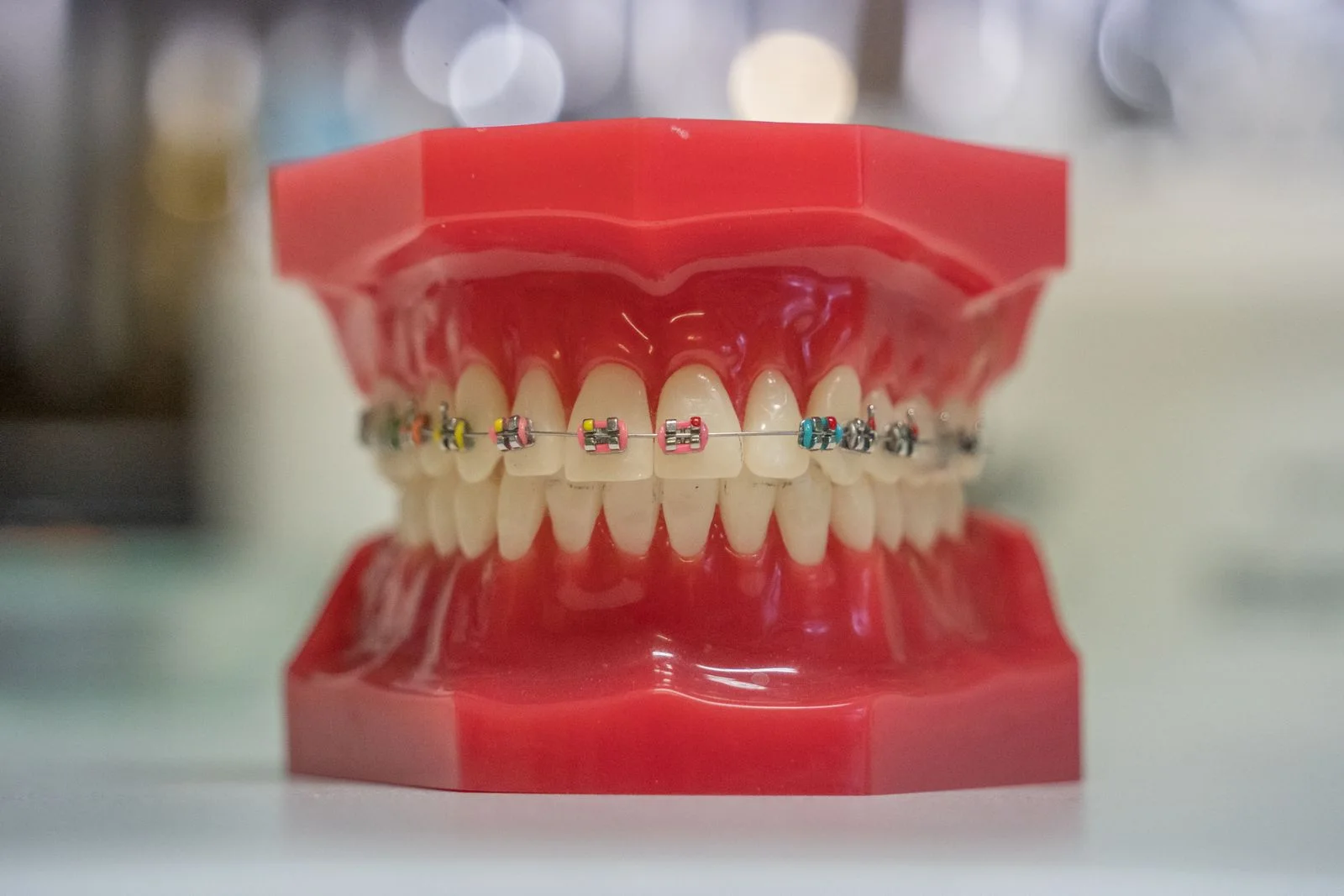
Illustrative metal braces model; a mouthguard is not pictured. Stock photograph for illustration; not a participating clinic, practitioner, patient or treatment result. Photo: Goran Grudić / Pexels.
Can you wear a mouthguard with braces?
If you wear braces and play sport, ask your treating orthodontist or dentist which mouthguard arrangement is appropriate for your appliance and activity. This guide helps you prepare that conversation; it does not select a guard, assess its fit or tell you how to alter it.
Explain the equipment question clearly
Tell the practitioner which sports you play, which appliance you currently wear or are considering, and whether you already own a mouthguard. Ask whether you should bring that guard to an appointment so the practitioner can explain the next step. An online photograph or product label cannot establish that a guard is appropriate for your current situation.
The Australian Society of Orthodontists comparison resource distinguishes metal braces, ceramic braces, lingual braces and clear aligners. It is a general appliance comparison, not an individual sports equipment assessment. Use the appliance name as a starting point for questions, not as a reason to choose a mouthguard yourself.
Ask who should answer questions about fit, protection and any change during treatment. If a sports club has equipment requirements, tell the practitioner what those requirements say and ask how to approach them alongside your orthodontic care.
Tell your orthodontist about every sport you play
Before your first appointment — or at any review — make a list of every activity that involves physical contact, collision, a ball, a stick, or a fall risk. This includes organised team sports such as football codes, hockey, basketball and netball, as well as individual activities such as martial arts, boxing, gymnastics, cycling and skateboarding.
Don’t self-select which sports seem relevant. An activity you consider low-risk (social touch football, for example) may still involve incidental contact. Your treating practitioner needs the full picture to advise you appropriately.
Healthdirect Australia recommends writing questions down before appointments and asking for explanations in understandable language — a useful discipline when covering topics outside the main treatment agenda.
Questions to prepare before your appointment
Bringing specific, written questions helps you use consultation time efficiently. The following list is a hypothetical preparation scenario — not a clinical protocol — to illustrate the kind of questions worth raising:
- “I play [sport] weekly. What type of mouthguard do you recommend with my specific appliance?”
- “Should I wear my mouthguard differently depending on whether I’m in full-contact or non-contact training?”
- “If I damage a bracket during sport, what should I do before my next appointment?”
- “Does my mouthguard need to be replaced or refitted as my teeth move during treatment?”
- “Are there sports where you’d recommend I pause treatment timing decisions around — for example, before a final series or a major event?”
- “Does the type of braces I have — metal versus ceramic — affect the mouthguard recommendation?”
Ask whether the appliance proposed for you changes the equipment discussion. That is an individual clinical question, not something this referral site can settle.
Appliance type and sport: a question record
Use the following prompts to record the practitioner’s actual explanation, without assuming the answer from a general appliance comparison.
| Point to discuss | What to ask |
|---|---|
| Current appliance | Which details of my appliance are relevant to a mouthguard decision? |
| Existing guard | Should I bring it for you to assess, and what information would help? |
| Proposed treatment | When should we discuss sports equipment in the treatment planning process? |
| Removable appliance | What are my individual instructions during the sports I play? |
| Training and competition | Do the recommendations differ for the activities I have described? |
| Review | Who should I contact if the equipment feels different or I have a concern? |
Leave the answer column open until you receive individual advice. Avoid treating the broad label “braces mouthguard” as confirmation that a particular product is suitable for you.
Ask before buying, modifying or replacing equipment
If you are comparing a shop-bought guard with an option offered through a dental practice, take the product details to the practitioner and ask what differences matter in your situation. Ask who checks fit and what follow-up is available. Price and appearance alone do not answer those questions.
Do not use this guide as instructions to mould, trim, heat or otherwise adjust equipment around an appliance. Ask the practitioner what instructions apply and who should carry out any fitting or adjustment. If you already have a concern about an appliance or mouthguard, contact your treating practice for guidance rather than relying on an online comparison.
Record the advice you receive and ask how to clarify it later. If a coach or family member helps organise equipment, ask what information you can share with them so they understand the practitioner’s recommendation without receiving unnecessary clinical details.
If you’re yet to start treatment
If you’re considering orthodontic treatment and play regular sport, raising this before treatment starts — not after brackets are placed — gives your treating practitioner the most useful information. Your sport schedule, season timing and position in a contact-sport team may all be relevant context when discussing treatment planning.
This is also relevant to the question of appliance type. Whether metal braces, ceramic braces or clear aligners suit your individual circumstances is a decision the practitioner makes after a proper in-person assessment. For background on what that assessment involves, see our guide to orthodontic assessment and records questions and first orthodontic consultation preparation.
Verifying your practitioner’s registration
Orthodontists are dental specialists. Ahpra and the relevant National Boards maintain public registers of dental practitioners, including specialist registration categories. You can search the register by individual name at the Ahpra website — searching a business name alone does not confirm an individual’s registration status.
For broader context on the difference between orthodontists and general dentists, see orthodontist and dentist roles — questions to ask.
Ready to ask your questions?
If you’re in Adelaide and looking to connect with an orthodontic practice to discuss braces and sport, our Braces Consultation Enquiries service can help you submit an enquiry. Adults considering treatment may also find the Adult Orthodontic Consultation Enquiries page useful. Specific questions about clear aligner options alongside sport can be directed through Clear Aligner Consultation Enquiries.
This website is an independent referral service, not a treating practice. All clinical decisions — including mouthguard type, appliance selection and treatment timing — remain with your registered treating practitioner.
Further reading and sources
- Australian Society of Orthodontists, Treatment Comparison Table: orthodonticsaustralia.org.au
- Australian Dental Association, Teeth Straightening and Braces: teeth.org.au
- Healthdirect Australia, Questions to ask your doctor: healthdirect.gov.au
- Ahpra, Registers of Practitioners: ahpra.gov.au
Sources and further reading
- Professional dental information — ASO_Treatment Comparison_Table_A4_V24.pdf
- healthdirect Australia — questions to ask your doctor
- Australian Dental Association — teeth straightening and braces
- Ahpra practitioner information — Professions and Divisions.aspx
Source links provide background, not an endorsement or clinical review of this page. Read our editorial approach.