
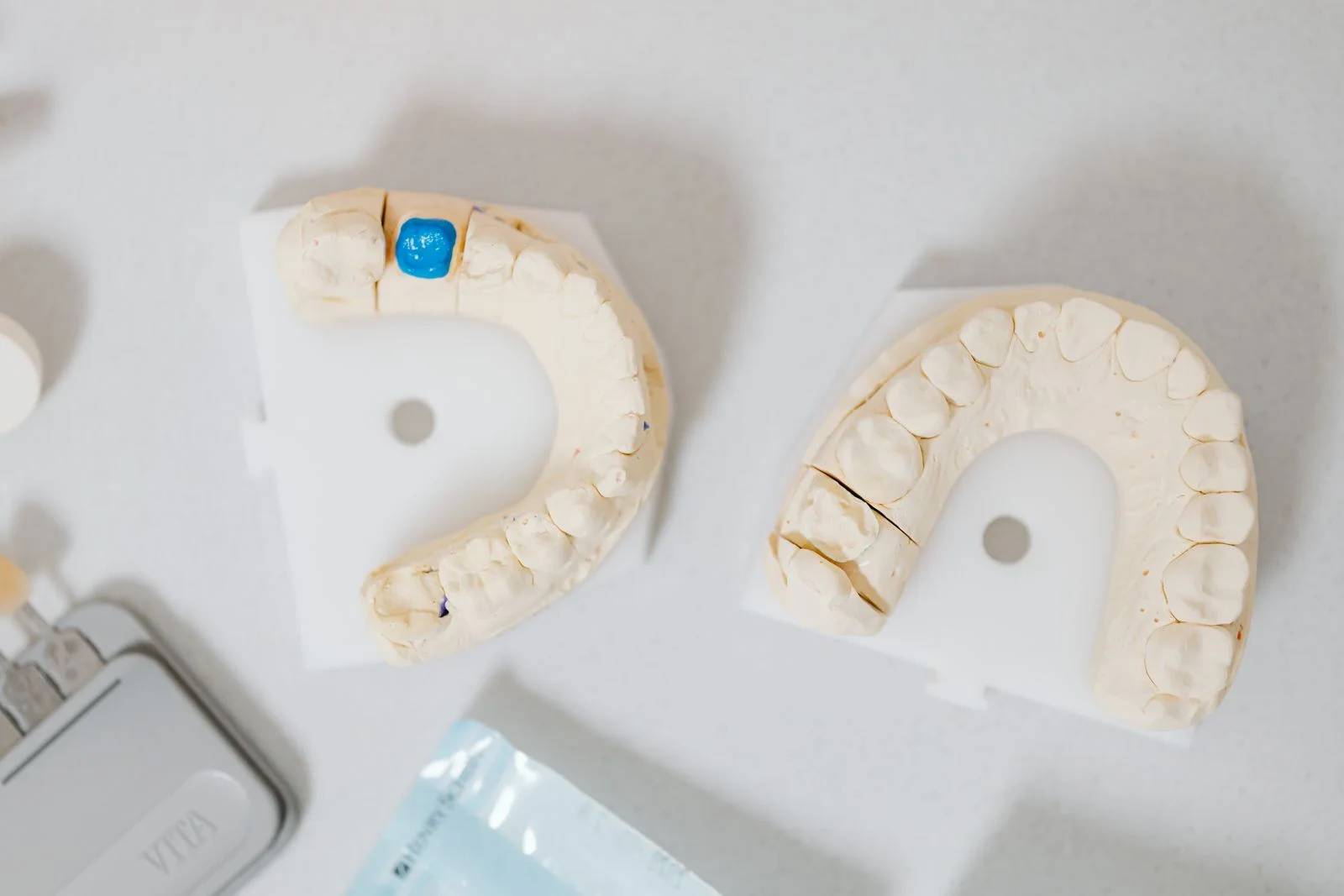
Stock photograph for illustration; not a participating clinic, practitioner, patient or treatment result. Photo: Kaboompics / Pexels.
What parents genuinely want to know before a children’s orthodontic assessment
A children’s orthodontic assessment is a clinical appointment where a registered dental practitioner examines your child’s teeth, jaws and bite development, then discusses whether any treatment is worth considering. Coming prepared with focused questions makes the appointment more productive — for you, your child, and the practitioner answering them.
Why the assessment itself belongs to a registered practitioner
Orthodontists are dental specialists, and general dentists may also provide some orthodontic treatment, according to the Australian Dental Association. What neither a referral website nor any other third party can do is look at your child’s mouth, review their records, or tell you whether intervention is warranted. Those judgements require a qualified person who can examine your child directly.
The role of this guide is to help you arrive at that appointment better prepared — not to substitute for it. If you want background on the difference between an orthodontist and a general dentist, the related guide Orthodontist and dentist roles: questions to ask covers that distinction in plain terms.
Questions worth writing down before the appointment
Healthdirect Australia recommends writing questions down in advance and asking practitioners to explain things in language you can understand. The following questions are grouped by theme to help you do exactly that.
About development and timing
- Is there anything in my child’s bite or jaw development that you are monitoring?
- Are the issues you can see likely to change as more adult teeth come through, or is earlier action usually considered?
- What happens if we watch and wait — does that ever simplify things, or does it sometimes make things harder?
About the assessment process itself
- What records do you gather at this appointment, and what do they tell you?
- Will X-rays be taken today, and what are they looking for specifically?
- At what point do you move from observation to recommending a treatment plan?
About appliance options
- If treatment is recommended, which appliance categories apply to a child at my child’s stage — metal braces, ceramic braces, lingual braces or clear aligners? The Australian Society of Orthodontists identifies these as the main treatment categories.
- Are there any of those options that wouldn’t suit a child’s jaw at this stage of development?
- What does each option require from my child day-to-day?
About the written plan and quote
- If we proceed, will I receive a written treatment plan?
- Does the quote include records, adjustment visits, retainers, and replacement retainers — or are those separate? The Australian Society of Orthodontists identifies retainers and their replacement as items worth confirming in a quote.
- What happens to the cost structure if treatment takes longer than expected?
About uncertainty
- What is the least certain part of the treatment plan at this stage?
- When would you expect to have a clearer picture of what’s needed?
Healthdirect specifically suggests asking about options, risks, benefits and areas of uncertainty — all of which apply equally in an orthodontic context.
A note on appliance categories
The Australian Society of Orthodontists treatment comparison document names four appliance categories used in orthodontics: metal braces, ceramic braces, lingual braces and clear aligners. Each has different characteristics relating to visibility, cleaning and the kind of movement they perform. That document also notes that which appliance is appropriate for an individual is a question for the practitioner, not a comparison chart.
For a broader explanation of what these categories mean before you attend an appointment, the guide What orthodontics means before a consultation provides useful background without crossing into clinical advice.
Hypothetical scenario: how preparation changes an appointment
This is a hypothetical example for illustration only — not a customer account.
Imagine two parents attending an initial assessment for a ten-year-old. Parent A arrives with no particular agenda; they respond to what they’re told but leave unsure whether their child needs treatment now, later or possibly not at all, and uncertain what records were taken or why.
Parent B arrives with four written questions: one about timing, one about the records being gathered, one about what the quote would include, and one asking what the practitioner is least certain about at this stage. They leave with answers to each, a clear sense of what ‘watching and waiting’ means in practice, and a list of items to confirm before accepting any written quote.
The clinical outcome isn’t influenced by preparation — that depends entirely on the child’s clinical picture. But the parent’s understanding of what is happening and why is markedly different.
Checking practitioner registration before you attend
Ahpra and the National Boards maintain public registers covering dental practitioners and specialist registration. It is worth searching the named individual practitioner — not just the practice name — before attending. Registration on the public register is a factual verification step; it is not an endorsement of any kind by this referral site, and it doesn’t tell you whether a particular practitioner is right for your child’s needs.
Understanding cost questions without specific numbers
Orthodontic quotes for children can vary considerably depending on what records are required, which appliance is recommended and how long treatment runs. The Australian Society of Orthodontists cost checklist identifies assessment fees, records, appliances, adjustment visits, retainers and replacement retainers as items whose inclusion in a quote should be confirmed explicitly.
Asking the practitioner to itemise what is and isn’t included — before signing anything — is a practical step regardless of the total. The related guide Orthodontic assessment and records questions goes deeper on what records typically involve and what questions to ask about them.
Preparing your child, not just yourself
Children are more cooperative in clinical appointments when they have a basic sense of what will happen. A simple explanation — “the dentist is going to look at how your teeth are growing and take some pictures” — reduces anxiety without overpromising. If your child has strong feelings about certain appliances they’ve heard about from friends, the appointment is the right place to raise that, not a reason to avoid attending.
For parents approaching a first appointment from scratch, the guide First orthodontic consultation preparation covers the practical logistics of that appointment in more detail.
Ready to arrange an assessment enquiry?
If you’re at the stage of wanting to connect with an orthodontic practitioner in Adelaide, you can submit a Braces Consultation Enquiry or a Clear Aligner Consultation Enquiry through this site. This service connects you with practitioners — it does not perform assessments or make treatment recommendations itself.
Further reading and sources
- Australian Dental Association — Teeth straightening and braces
- Australian Society of Orthodontists — Treatment comparison table
- Australian Society of Orthodontists — Orthodontics checklist
- Healthdirect Australia — Questions to ask your doctor
- Ahpra — Registers of Practitioners
Sources and further reading
- Australian Dental Association — teeth straightening and braces
- Professional dental information — ASO_Treatment Comparison_Table_A4_V24.pdf
- Professional dental information — 2019 09 OA Orthodontics Checklist A4 concepts_v2.pdf
- healthdirect Australia — questions to ask your doctor
- Ahpra practitioner information — Professions and Divisions.aspx
Source links provide background, not an endorsement or clinical review of this page. Read our editorial approach.