
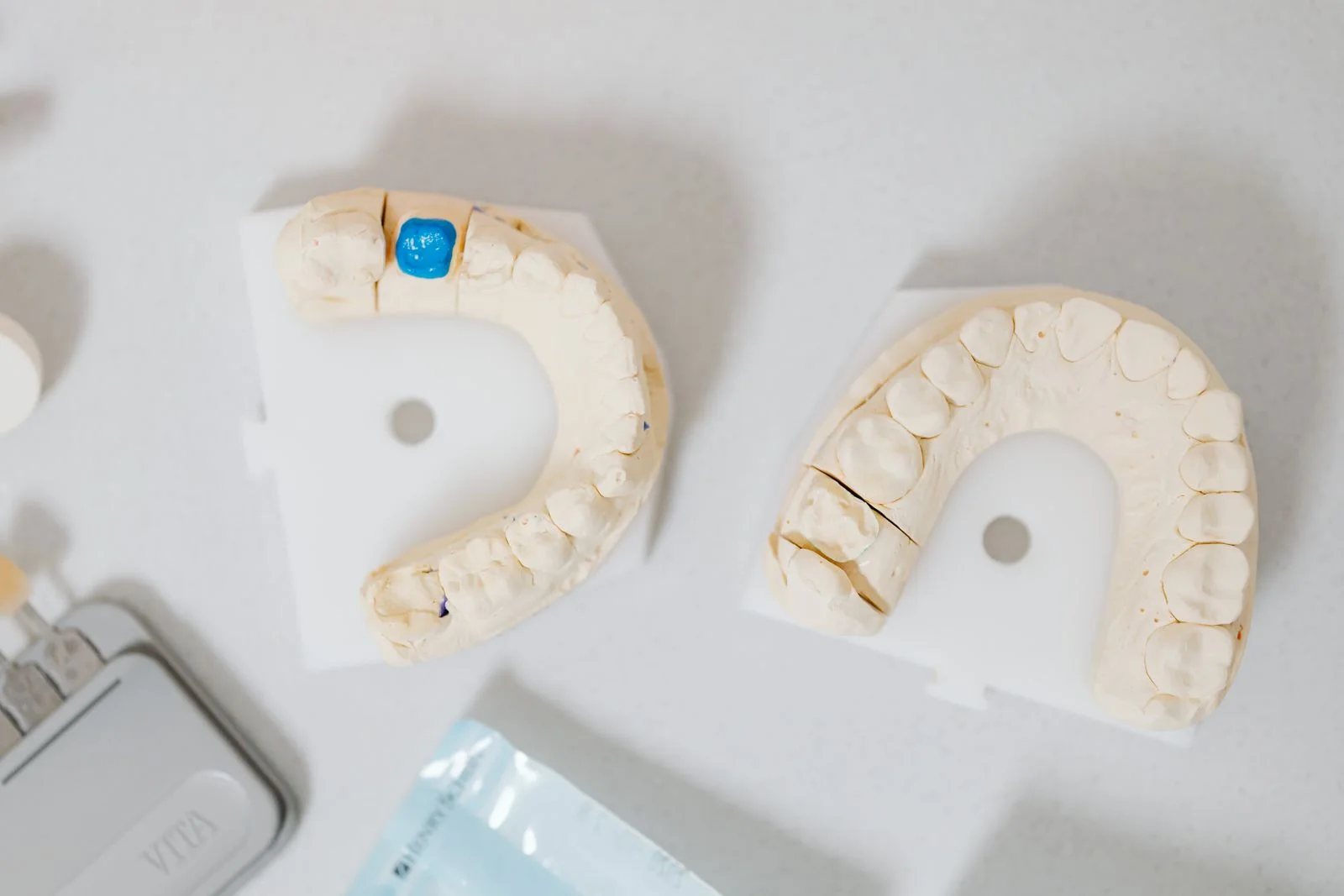
Stock photograph for illustration; not a participating clinic, practitioner, patient or treatment result. Photo: Kaboompics / Pexels.
If you have been told you may have a crossbite, the most useful thing you can do before seeing an orthodontist is prepare a focused list of questions. A crossbite is a bite relationship where one or more upper teeth sit inside the lower teeth when the jaws close — the reverse of the typical overlap — and understanding what that means for your situation is a job for a registered treating practitioner, not a webpage. This guide helps you walk into that appointment ready to listen, ask and compare.
What ‘crossbite’ actually means — and why the word matters
Orthodontic terminology can blur quickly in conversation. A crossbite describes a lateral misalignment of upper and lower teeth, but practitioners also distinguish between anterior crossbite (front teeth) and posterior crossbite (back teeth), and between dental crossbite (tooth position) and skeletal crossbite (jaw relationship). These distinctions affect what an orthodontist examines and how they describe a treatment path.
For context, orthodontics broadly concerns the alignment of teeth and the relationship between the upper and lower jaws. Related terms you may encounter include overbite (vertical overlap of front teeth), underbite (lower front teeth sitting in front of upper) and overjet (horizontal gap between front teeth). Knowing the vocabulary helps you follow clinical explanations rather than nodding and hoping for the best.
A useful starting question at consultation: “When you say crossbite, are you describing a tooth position, a jaw position, or both?”
See also: What orthodontics means before a consultation
Why individual assessment comes before any appliance discussion
The Australian Dental Association notes that in-person assessment and clinical supervision are essential before any orthodontic treatment — no online image or self-diagnosis substitutes for clinical examination. What is visible in a mirror tells you almost nothing about jaw alignment, bone structure or the relationship between teeth that are still erupting.
At a consultation, the practitioner typically examines occlusion (how the teeth meet), reviews dental and medical history, and may request diagnostic records such as photographs, models or radiographs. Each piece of information builds a clinical picture. An orthodontist is a registered dental specialist; some general dentists also provide orthodontic treatment. You can verify registration on the Ahpra public register by searching the individual practitioner’s name.
Useful questions before or at your first appointment:
- “What records will you take, and why does each one matter for my situation?”
- “Will I see a treatment plan in writing before anything starts?”
- “Is there anything in my dental or medical history I should flag before the examination?”
See also: Orthodontic assessment and records questions and First orthodontic consultation preparation
Questions about appliance options — without expecting a recommendation here
The Australian Society of Orthodontists identifies several broad appliance categories used in orthodontics: metal braces, ceramic braces, lingual braces and clear aligners. Which of these is appropriate for a specific crossbite presentation is a clinical decision that belongs entirely to the treating practitioner after proper assessment — a referral website cannot and should not steer you toward one.
What you can reasonably ask at consultation:
- “Which appliance types are clinically suited to the crossbite pattern you’ve found?”
- “Are there any approaches you would not recommend for my situation, and why?”
- “If a jaw expander or other auxiliary device is involved, how does that work alongside an aligner or brace?”
- “What happens if I choose a different option from the one you recommend?”
For an adult consultation, ask the practitioner how your individual assessment affects the options they discuss. Healthdirect recommends asking for explanations you understand, including uncertainty and the reasons for a recommendation.
See also: Braces Consultation Enquiries | Clear Aligner Consultation Enquiries | Adult Orthodontic Consultation Enquiries
Hypothetical consultation preparation scenario
The following is a hypothetical scenario to illustrate how preparation helps — it is not a customer story or outcome claim.
Imagine someone attending an Adelaide orthodontic consultation after their dentist mentioned a possible crossbite on the left side. Without preparation they might spend most of the appointment nodding, leave unsure whether the crossbite is dental or skeletal, and not know what records were taken or why. With a written question list covering terminology, the records process, written treatment plans, appliance options and what is included in the quoted fee, that same person leaves with concrete answers and a clearer basis for deciding whether to proceed. The consultation outcome is the same either way — the practitioner’s assessment does not change — but the informed patient can actually use the information.
Questions about the treatment plan and what it includes
The Australian Society of Orthodontists cost checklist prompts patients to ask about assessment fees, records, the appliances themselves, routine visits, retainers and replacement retainers. Not every item is universally included in every quote, and what is bundled varies between practices. Before agreeing to anything, ask:
- “What does the quoted fee include, and what would be charged separately?”
- “What is the retainer situation at the end of treatment?”
- “What happens to the cost or plan if treatment takes longer than expected?”
A written treatment plan lets you compare and re-read at home — do not rely on memory alone for clinical detail.
Knowing who does what
For crossbite concerns, your starting point may be a general dentist who then refers to an orthodontic specialist, or you may be able to self-refer to a specialist orthodontist directly in many Australian states. The orthodontist and dentist roles differ: orthodontists complete additional specialist training beyond dentistry, whereas a general dentist may provide some orthodontic treatment within their scope.
See also: Orthodontist and dentist roles questions to ask
Before you request a consultation enquiry
Make a written list of your questions before you attend — healthdirect Australia recommends writing questions down so you do not forget under time pressure. Include anything your dentist has already said, any symptoms you associate with your bite (such as jaw discomfort or uneven wear), and any concerns about timing or cost. That list makes the consultation more productive regardless of which practitioner you see.
If you are ready to take the next step, you can use the DentalFox Orthodontics enquiry service to connect with an orthodontic provider in Adelaide. DentalFox is a referral platform, not a treating practice — the clinical assessment and treatment decisions belong to the registered practitioner you are matched with.
Further reading and sources
- Australian Dental Association — Teeth straightening and braces
- Australian Society of Orthodontists — Treatment comparison overview
- Australian Society of Orthodontists — Orthodontics checklist
- healthdirect Australia — Questions to ask your doctor
- Ahpra — Registers of Practitioners
Sources and further reading
- Australian Dental Association — teeth straightening and braces
- Professional dental information — ASO_Treatment Comparison_Table_A4_V24.pdf
- Professional dental information — 2019 09 OA Orthodontics Checklist A4 concepts_v2.pdf
- healthdirect Australia — questions to ask your doctor
- Ahpra practitioner information — Professions and Divisions.aspx
Source links provide background, not an endorsement or clinical review of this page. Read our editorial approach.