
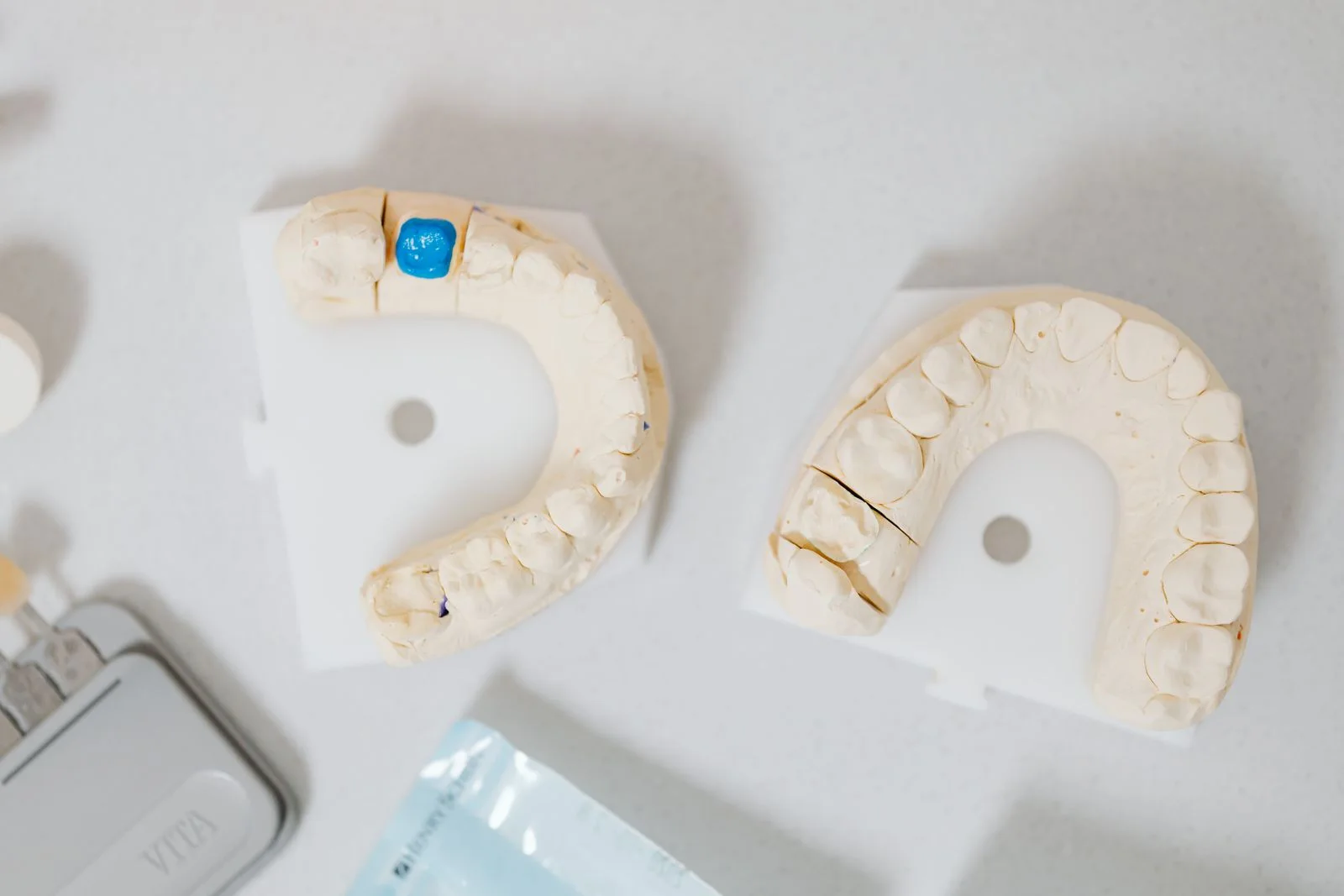
Stock photograph for illustration; not a participating clinic, practitioner, patient or treatment result. Photo: Kaboompics / Pexels.
What orthodontic scans and impressions actually are
When a clinic mentions orthodontic scans or impressions, they are referring to methods used to capture a detailed three-dimensional record of your teeth, gums and bite. These records are separate from X-rays and from the visual examination your practitioner conducts. Understanding what each term means before your appointment helps you follow the conversation, ask better questions and avoid being caught off guard by a step in the process you were not expecting.
Two broad methods are in common use. Digital intraoral scanning uses a handheld wand that moves around your mouth and builds a 3D model on screen in real time. Physical impressions involve a tray filled with a putty-like material that sets around your teeth to form a mould. Some practices use one method; some offer both. Your treating orthodontist or dentist is the right person to explain which approach applies to your situation and why.
See also: What orthodontics means before a consultation
Terms the clinic might use — a plain-language glossary
Clinics and orthodontists use a range of shorthand terms. Here is what several of the most common ones generally mean:
- iTero / 3Shape / Trios – brand names for digital intraoral scanners. Hearing one of these names simply means the practice uses that manufacturer’s device to create a digital impression.
- Study models – physical or digital three-dimensional copies of your teeth used for planning and record-keeping.
- Alginate impression – a traditional physical impression made using a seaweed-derived setting material. The resulting cast is usually poured in dental stone (plaster) to create study models.
- CBCT or cone beam CT – a type of three-dimensional X-ray that captures bone structure, tooth roots and surrounding tissue in detail. It is distinct from a standard dental X-ray and from an intraoral scan.
- Photos / extraoral and intraoral photographs – standardised clinical photographs of your face and teeth taken from set angles. These form part of your records.
- Bite registration – a record of how your upper and lower teeth meet, often taken separately from the impressions themselves.
Hearing any of these terms during a consultation does not mean your treatment plan has been decided. Records are gathered before a diagnosis is made.
Why a practitioner requests these records
Orthodontic treatment involves moving teeth through bone over time. To plan that movement accurately, the treating practitioner needs accurate starting-point information. The Australian Society of Orthodontists notes that treatment planning involves assessment of the teeth and bite, and that records such as photographs and models form part of that process.
Specific reasons records might be requested include:
- Measuring tooth size, spacing and crowding in three dimensions, which a visual examination alone cannot fully capture
- Comparing the position of teeth before, during and after treatment
- Communicating between practitioners — for example, between an orthodontist and your general dentist
- Producing clear aligners or other custom appliances, which are fabricated from precise digital or physical models
- Documenting a baseline for medico-legal and insurance purposes
Whether a scan, a physical impression, or both are needed in your case is a clinical decision. Ask your practitioner to explain which records they are proposing, and why each is relevant to your situation.
Related guide: Orthodontic assessment and records questions
A hypothetical scenario: navigating a records appointment (illustrative only)
This is a hypothetical example to illustrate the kind of questions that may arise — it is not based on any real patient.
Imagine someone attending a first orthodontic consultation who has only ever had standard dental check-ups. The practitioner mentions they would like to take a “digital scan, some photos and a lateral ceph” before discussing options. The patient, unfamiliar with the terminology, is unsure whether to agree, whether there is a cost, and whether these records will be shared.
Useful questions in that moment might include:
- What is each of these records used for?
- Is the cost of records included in today’s consultation fee, or billed separately?
- Will I receive a copy of my records?
- Who else will have access to them, and under what circumstances?
- If I decide not to proceed with treatment, what happens to my records?
Writing these questions down before you attend — a practice recommended by Healthdirect Australia — means you are less likely to leave the appointment with unanswered concerns.
Privacy, consent and your records
Orthodontic records including scans, photographs and study models are clinical records. In Australia, healthcare providers are bound by privacy legislation governing how personal health information is collected, stored, used and disclosed. Before records are taken, your practitioner should explain the purpose and obtain your consent.
Questions worth asking:
- Under what circumstances would my records be shared with a third party (for example, an aligner manufacturer or a specialist)?
- How long are my records retained?
- Can I request access to or a copy of my own records?
If you are considering treatment for a child or teenager, the same questions apply — and it is worth asking how consent is handled for minors in that practice.
Verifying your practitioner’s registration
Orthodontists are registered dental specialists. The Australian Health Practitioner Regulation Agency (Ahpra) maintains a public register of all registered dental practitioners, including those with specialist registration in orthodontics. You can search the register by individual name at the Ahpra website to confirm registration status before attending. Checking the register confirms the named individual’s status — a business name alone is not sufficient.
Related guide: Orthodontist and dentist roles questions to ask
Questions to prepare before your records appointment
The following checklist is a starting point. Your treating practitioner will determine what is clinically relevant for you.
About the records themselves
- Which records are you proposing to take, and what is each one for?
- Is a digital scan, physical impression, or both being used — and why?
- Will I be able to see the scan or model once it is taken?
About costs
- Are records costs included in the consultation fee, or charged separately?
- If I need replacement records later in treatment, is that included?
About appliance types The Australian Society of Orthodontists identifies metal braces, ceramic braces, lingual braces and clear aligners as distinct categories of orthodontic appliance. If you are curious about how your records relate to the appliance options available to you, ask the practitioner to explain the connection during your consultation.
See also: First orthodontic consultation preparation
Finding out more and taking next steps
If you are preparing for a consultation about braces, clear aligners or adult orthodontic treatment in Adelaide, understanding the records process helps you use that appointment time well. This site provides information and an enquiry form, with referrals subject to availability. It is not a treating practice, and nothing here substitutes for the clinical judgement of a registered practitioner.
- Braces Consultation Enquiries
- Clear Aligner Consultation Enquiries
- Adult Orthodontic Consultation Enquiries
Further reading
- Australian Society of Orthodontists – Treatment Comparison Table: https://orthodonticsaustralia.org.au/wp-content/uploads/2020/01/ASO_Treatment-Comparison_Table_A4_V24.pdf
- Ahpra Registers of Practitioners: https://www.ahpra.gov.au/Registration/Registers-of-Practitioners/Professions-and-Divisions.aspx
- Healthdirect Australia – Questions to ask your doctor: https://www.healthdirect.gov.au/healthcare-and-services/general-health/questions-to-ask-your-doctor
- Australian Dental Association – Teeth straightening and braces: https://teeth.org.au/teeth-straightening-and-braces
Sources and further reading
- Professional dental information — ASO_Treatment Comparison_Table_A4_V24.pdf
- Ahpra practitioner information — Professions and Divisions.aspx
- healthdirect Australia — questions to ask your doctor
- Australian Dental Association — teeth straightening and braces
Source links provide background, not an endorsement or clinical review of this page. Read our editorial approach.