
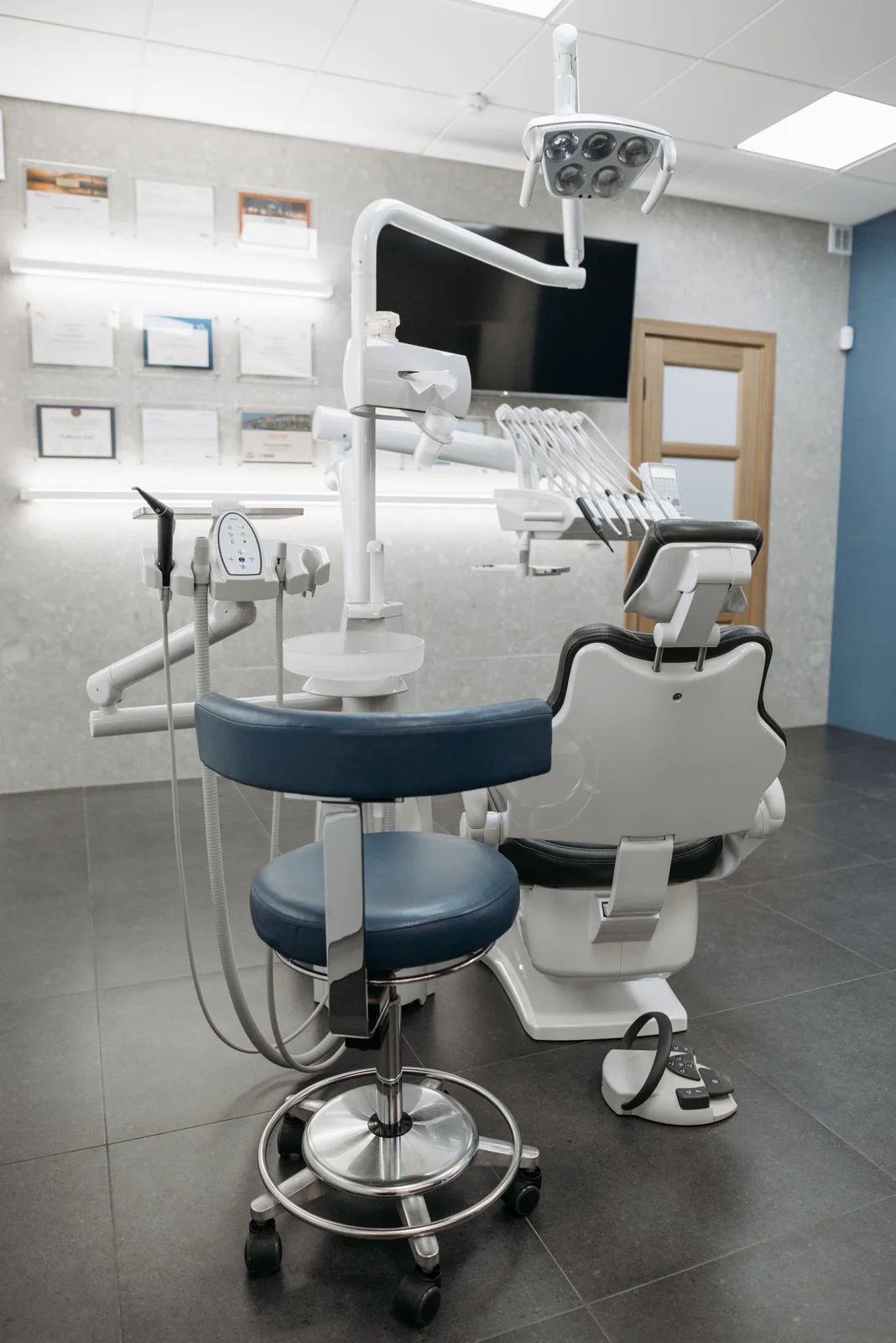
Illustrative dental consultation setting; the named appliance is not pictured. Stock photograph for illustration; not a participating clinic, practitioner, patient or treatment result. Photo: Pavel Danilyuk / Pexels.
What to Ask at a Lingual Braces Consultation
If you are exploring lingual braces, your most useful preparation is a written list of questions ready before you sit down with a practitioner. Lingual braces sit on the inside (tongue-facing) surface of the teeth, which raises distinct questions around fit, speech adjustment and clinical access that do not apply to conventional outside-facing appliances. This guide walks through the terminology you will encounter, the questions worth raising, and what to request in writing.
Understanding Position-Related Terminology Before You Go In
Orthodontic appliances are described using anatomical position words that can feel unfamiliar in conversation. Knowing them beforehand lets you follow the consultation rather than decode language on the fly.
Labial refers to the lip-facing surface of front teeth — where conventional metal or ceramic braces are bonded. Lingual refers to the tongue-facing surface — where lingual brackets are placed. This positional difference is the defining characteristic of the appliance, not simply a cosmetic preference.
You may also hear:
- Buccal — the cheek-facing side of back teeth
- Occlusal — the biting surface
- Archwire — the wire threaded through brackets that applies controlled force
- Bracket — the small fitting bonded to each tooth
- Debond — the removal of bonded brackets at the end of active treatment
- Retention — the phase after active tooth movement, typically involving a retainer
The Australian Society of Orthodontists treatment comparison lists lingual braces alongside metal braces, ceramic braces and clear aligners as distinct appliance categories. Understanding that these categories exist helps you ask meaningful comparison questions rather than accepting a single recommendation without context.
See also: What orthodontics means before a consultation
Questions About the Provider and Their Assessment Process
Orthodontists are dental specialists registered on the Ahpra specialist register, which is publicly searchable by individual name. General dentists may also provide some orthodontic treatment. Knowing which type of practitioner you are seeing shapes the questions you ask about their experience with lingual techniques specifically, since lingual placement requires a different clinical skillset from labial bonding.
Provider questions worth preparing:
- Are you registered as an orthodontic specialist, or as a general dental practitioner providing orthodontic treatment?
- How frequently do you place lingual appliances compared with labial braces or clear aligners?
- Which lingual bracket system do you use, and why do you prefer it for certain presentations?
- Do you take diagnostic records (photographs, radiographs, models or digital scans) before recommending an appliance type, or is a recommendation made at the same visit?
Ahpra’s public register allows you to verify an individual practitioner’s registration and specialty status before or after your appointment. Looking up the treating person’s name — not the business name — is the reliable approach.
See also: Orthodontist and dentist roles questions to ask
Questions About the Appliance Itself
Because lingual brackets face the tongue rather than the lips, they interact differently with speech, oral hygiene and dietary habits than labial appliances do. These are legitimate clinical questions, not trivial concerns.
Appliance-specific questions to raise:
- How long does speech adjustment typically take for patients with this appliance?
- How is cleaning approached differently from labial braces?
- What restrictions apply to diet during treatment?
- How are appointments different — in length or frequency — from labial brace appointments?
- If a bracket debonds, what is the process for rebonding on the lingual surface?
- Is a removable or fixed retainer planned after active treatment, and why?
The Australian Society of Orthodontists cost checklist notes that questions about retainers, replacement retainers and ongoing follow-up are relevant to include in any quote discussion — worth confirming explicitly rather than assuming inclusions.
Comparison Questions: Lingual Braces Versus Other Appliances
A practitioner recommending lingual braces should be able to explain why that appliance suits your specific clinical situation compared with alternatives. The ASO treatment comparison identifies metal braces, ceramic braces, lingual braces and clear aligners as the main categories. Asking about alternatives is not a challenge to the practitioner’s judgement — it is a reasonable part of informed consent.
Useful comparison questions:
- What would be the clinical argument for ceramic braces over lingual braces in my case?
- Are there bite or spacing characteristics that would make lingual braces less suitable?
- If I were not concerned about visibility, would the recommended appliance change?
Healthdirect Australia advises patients to ask about options, risks, benefits and uncertainty during any health consultation — writing questions down in advance improves recall and reduces the chance of leaving without answers.
Hypothetical scenario (illustrative, not a customer story): Imagine someone attending a first lingual braces consultation who has prepared three questions but, mid-appointment, forgets to ask about retainer type. Having a written checklist means they can confirm before leaving rather than following up by phone, saving time for both parties.
Requesting a Written Treatment Explanation
A written treatment plan is worth requesting explicitly. It should allow you to review what was discussed, compare it against any second opinion, and confirm the scope of what any quote covers. Verbal summaries are easily misremembered on both sides.
Ask for written clarification on:
- The clinical rationale for the recommended appliance
- What records were taken and how they inform the plan
- The proposed stages of treatment
- What is included in any quoted fee (assessment, records, appliances, adjustment visits, retainers, emergency appointments)
- What would occur if treatment needs to be modified during progress
The ASO cost checklist specifically prompts questions about whether records, appliances, visits and retainers are included in quoted costs — these are not automatically universal inclusions and are worth confirming in writing.
See also: First orthodontic consultation preparation and Orthodontic assessment and records questions
Verifying Registration Before or After Your Appointment
Ahpra maintains a public register of dental practitioners and dental specialists. You can search by practitioner name to confirm current registration status and whether a specialist qualification is listed. This is a routine step recommended for any registered health practitioner, not specific to orthodontics.
Registration on the Ahpra register does not constitute an endorsement by this referral website, and registration status can change — always check the register directly.
Preparing to Use Your Consultation Time Well
A lingual braces consultation typically covers a lot of ground in a limited time. Healthdirect Australia suggests writing questions down beforehand and asking for explanations in plain language if clinical terminology is unclear. You are entitled to ask the practitioner to slow down or restate anything that is not clear.
Bringing a support person can help with recall. Taking brief notes or asking whether the consultation can be summarised in a follow-up letter or patient portal message is reasonable.
If you are exploring options in Adelaide, you can use the Braces Consultation Enquiries or Adult Orthodontic Consultation Enquiries pages to connect with a local practitioner. If lingual braces turn out not to be the right fit, Clear Aligner Consultation Enquiries may also be worth exploring alongside your practitioner’s advice.
Further Reading
- Australian Society of Orthodontists – Treatment Comparison Table: https://orthodonticsaustralia.org.au/wp-content/uploads/2020/01/ASO_Treatment-Comparison_Table_A4_V24.pdf
- Australian Society of Orthodontists – Orthodontics Cost Checklist: https://orthodonticsaustralia.org.au/wp-content/uploads/2019/11/2019-09-OA-Orthodontics-Checklist-A4-concepts_v2.pdf
- Australian Dental Association – Teeth Straightening and Braces: https://teeth.org.au/teeth-straightening-and-braces
- Ahpra Registers of Practitioners: https://www.ahpra.gov.au/Registration/Registers-of-Practitioners/Professions-and-Divisions.aspx
- Healthdirect Australia – Questions to Ask Your Doctor: https://www.healthdirect.gov.au/healthcare-and-services/general-health/questions-to-ask-your-doctor
Sources and further reading
- Professional dental information — ASO_Treatment Comparison_Table_A4_V24.pdf
- Australian Dental Association — teeth straightening and braces
- Ahpra practitioner information — Professions and Divisions.aspx
- Professional dental information — 2019 09 OA Orthodontics Checklist A4 concepts_v2.pdf
- healthdirect Australia — questions to ask your doctor
Source links provide background, not an endorsement or clinical review of this page. Read our editorial approach.