
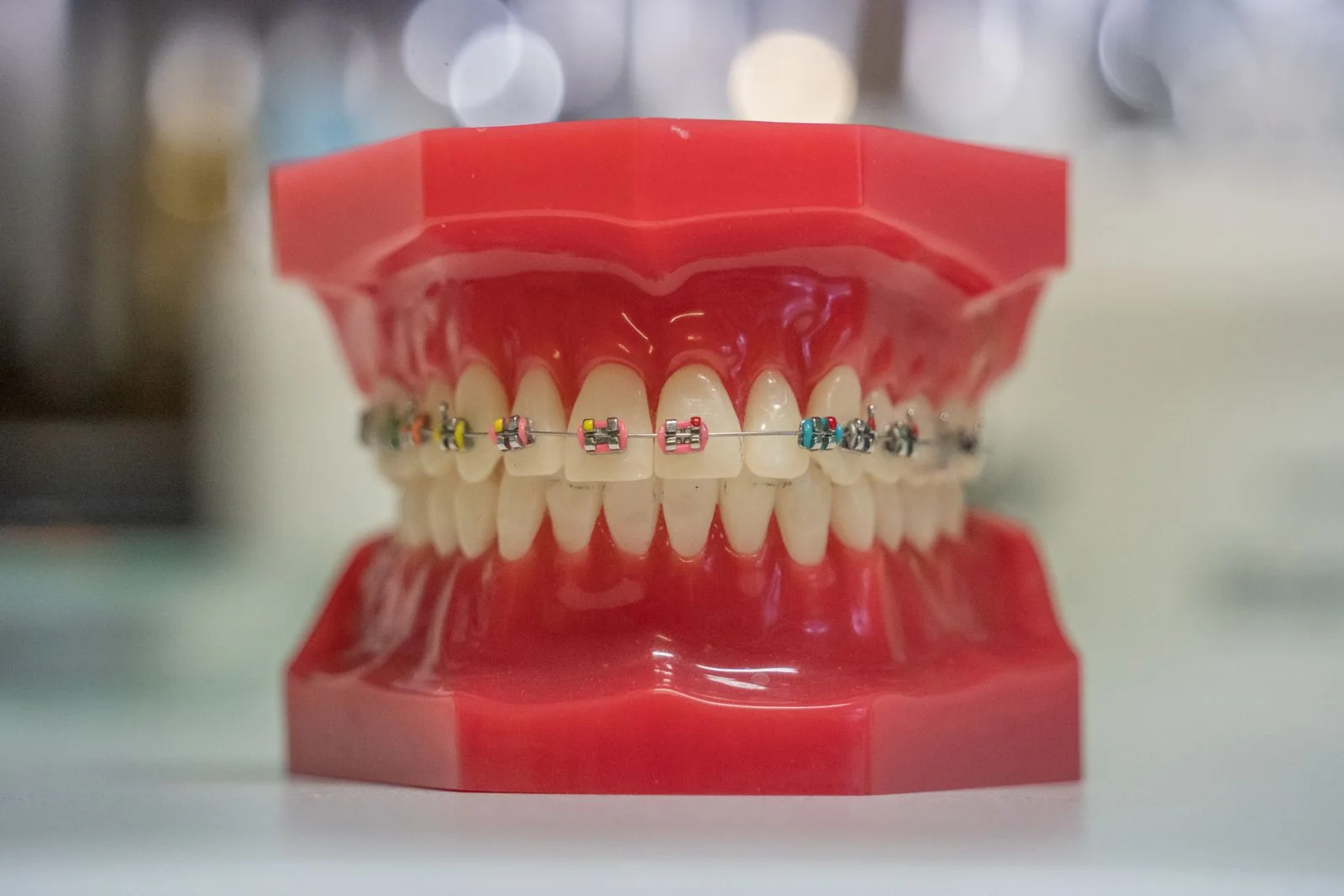
Stock photograph for illustration; not a participating clinic, practitioner, patient or treatment result. Photo: Goran Grudić / Pexels.
Walking into a metal braces consultation without a prepared list of questions is like arriving at a job interview without reading the position description. The appointment moves quickly, clinical jargon can blur, and the decisions you make affect months or years of your life. The questions below are designed to help you understand what the orthodontist is proposing and why — not to substitute for their professional assessment.
Why question preparation matters before this appointment
Healthdirect Australia recommends writing down questions before any health appointment, asking for explanations in plain language, and querying options, risks and uncertainty before accepting a plan. That advice applies directly to orthodontic consultations, where the practitioner will cover a lot of ground in a relatively short visit.
Metal braces remain one of the most discussed orthodontic options. Because they involve brackets bonded to teeth, archwires and periodic adjustments, there is genuine terminology and process detail that is worth understanding before you nod along. See our guide on first orthodontic consultation preparation for broader appointment logistics.
Basic appliance terminology: what do these words actually mean?
Before you can evaluate a treatment proposal, you need a working vocabulary. The Australian Society of Orthodontists identifies metal braces, ceramic braces, lingual braces and clear aligners as distinct appliance categories — each with different characteristics. Metal braces typically consist of:
- Brackets — small metal fittings bonded directly to the front surface of each tooth
- Archwire — the wire that threads through each bracket and applies directional pressure
- Ligatures or ties — elastic or metal ties that hold the wire inside the bracket slot
- Bands — metal rings sometimes fitted around back molars to anchor the wire
- Auxiliaries — additional components such as springs, coils or hooks added for specific tooth movements
You do not need to memorise every component, but knowing what a bracket and archwire are lets you ask sensible follow-up questions when the orthodontist says something like “we’ll change the wire at each visit.”
Useful questions to ask:
- What does each part of the appliance actually do?
- Are there different bracket designs and, if so, why are you recommending this one for me?
- How is metal different in practice from ceramic or lingual for a case like mine?
Your orthodontist — a registered dental specialist — is the right person to explain how appliance choice relates to your individual clinical situation. The Australian Dental Association notes that a dentist or orthodontist advises individual suitability; this is not something a general information source can determine.
What the treatment plan proposes: questions about the written document
A treatment plan is not a marketing brochure. It should communicate what problem is being addressed, how the appliance addresses it, and what the sequence of appointments looks like. The Australian Society of Orthodontists cost checklist prompts patients to ask specific questions about what their quote actually includes.
Consider asking about each of these elements:
Hypothetical consultation scenario (illustrative only, not a real patient): Imagine you receive a written quote that states a total fee but does not specify whether X-rays, records, retainers and replacement retainers are included. Asking specifically about each item before you sign could prevent a surprise invoice mid-treatment.
Questions worth raising about the plan:
- What records (X-rays, photographs, moulds or scans) are needed, and are they included in the quoted fee?
- Roughly how many adjustment visits does the plan anticipate, and are those visits covered?
- What happens if a bracket debonds or a wire breaks — is that included?
- Are retainers included at the end of active treatment, and what about replacement retainers later?
- What would change the timeline or the fee?
Nothing in this guide can tell you what your quote should include; that depends on the practice and the clinical scope involved. The point is to ask, not to assume.
Individual assessment: understanding why this plan is for you specifically
The single most important thing to clarify is the reasoning behind the recommendations, not just the recommendations themselves. Orthodontic treatment addresses teeth and bite alignment, and the clinical rationale connects your particular situation to the proposed approach.
Questions focused on individual assessment:
- What specific alignment or bite issue are we trying to correct?
- Are teeth extractions being proposed, and if so, why?
- Are there any jaw or skeletal factors involved?
- Is there anything about my medical or dental history that affects how treatment proceeds?
- What are the realistic alternatives, and what are the trade-offs?
The Australian Dental Association notes that orthodontists are dental specialists and that general dentists may also provide some orthodontic treatment. If you are unsure of your treating practitioner’s registration category, Ahpra maintains a public register where you can verify an individual’s registration and specialist status by name. See also our guide on orthodontist and dentist roles: questions to ask for more on this distinction.
Questions about the adjustment schedule and daily impact
Metal braces require periodic clinical visits to change wires and check progress. Understanding the rhythm of these appointments helps you plan around work, school or travel.
- How frequently will adjustment appointments be needed, and how long does each one take?
- What dietary changes are expected while the appliance is in place?
- How do I clean around brackets and wires effectively?
- What symptoms are normal after an adjustment, and what warrants an urgent call?
The answers will come from your treating practitioner based on your specific appliance and clinical situation — not from any general guide, including this one.
Questions about retainers and what happens after active treatment
Active treatment — the period when the braces are on — is only one part of the process. Retention is what maintains the result afterwards. Many patients focus entirely on the appliance phase and are surprised by the ongoing retainer commitment.
- What type of retainer will I need — fixed, removable or both?
- How long will I need to wear or maintain retainers?
- What is the separate cost of retainers if they are not included?
- What happens clinically if I stop wearing removable retainers?
The ASO cost checklist specifically prompts patients to ask about retainers and replacement retainers as distinct line items.
Verifying your practitioner and understanding the referral process
This site is a referral service, not a treating practice. We connect people with consultation opportunities; clinical decisions are made by the registered practitioner you see in person. If you have been referred by a general dentist, it is worth asking your orthodontist what information they have received and whether any existing dental work needs to be completed before or during orthodontic treatment.
To verify that the individual treating you holds current registration, search the Ahpra public register by the practitioner’s name rather than just the business name.
For adults specifically, our adult orthodontic consultation enquiries page can help you take the next step, and our guide what orthodontics means before a consultation gives broader context if this is your first time exploring treatment.
A short checklist to take to your appointment
Print or screenshot this list and tick items off as you cover them:
- Appliance components explained in plain language
- Reason this appliance was recommended over alternatives
- Written treatment plan sighted and explained
- Quote inclusions clarified (records, adjustments, brackets, retainers)
- Extraction or additional procedures discussed and explained
- Adjustment frequency and visit duration confirmed
- Retainer type and retention period explained
- Practitioner registration category clarified
- Next steps and how to contact the practice between visits
Ready to find a consultation? Visit our braces consultation enquiries page to submit an enquiry for metal braces Adelaide.
Further reading and sources
- Australian Society of Orthodontists, Treatment Comparison Table: https://orthodonticsaustralia.org.au/wp-content/uploads/2020/01/ASO_Treatment-Comparison_Table_A4_V24.pdf
- Australian Society of Orthodontists, Orthodontics Checklist: https://orthodonticsaustralia.org.au/wp-content/uploads/2019/11/2019-09-OA-Orthodontics-Checklist-A4-concepts_v2.pdf
- Australian Dental Association, Teeth Straightening and Braces: https://teeth.org.au/teeth-straightening-and-braces
- healthdirect Australia, Questions to ask your doctor: https://www.healthdirect.gov.au/healthcare-and-services/general-health/questions-to-ask-your-doctor
- Ahpra, Registers of Practitioners: https://www.ahpra.gov.au/Registration/Registers-of-Practitioners/Professions-and-Divisions.aspx
Sources and further reading
- Professional dental information — ASO_Treatment Comparison_Table_A4_V24.pdf
- Professional dental information — 2019 09 OA Orthodontics Checklist A4 concepts_v2.pdf
- healthdirect Australia — questions to ask your doctor
- Australian Dental Association — teeth straightening and braces
- Ahpra practitioner information — Professions and Divisions.aspx
Source links provide background, not an endorsement or clinical review of this page. Read our editorial approach.