
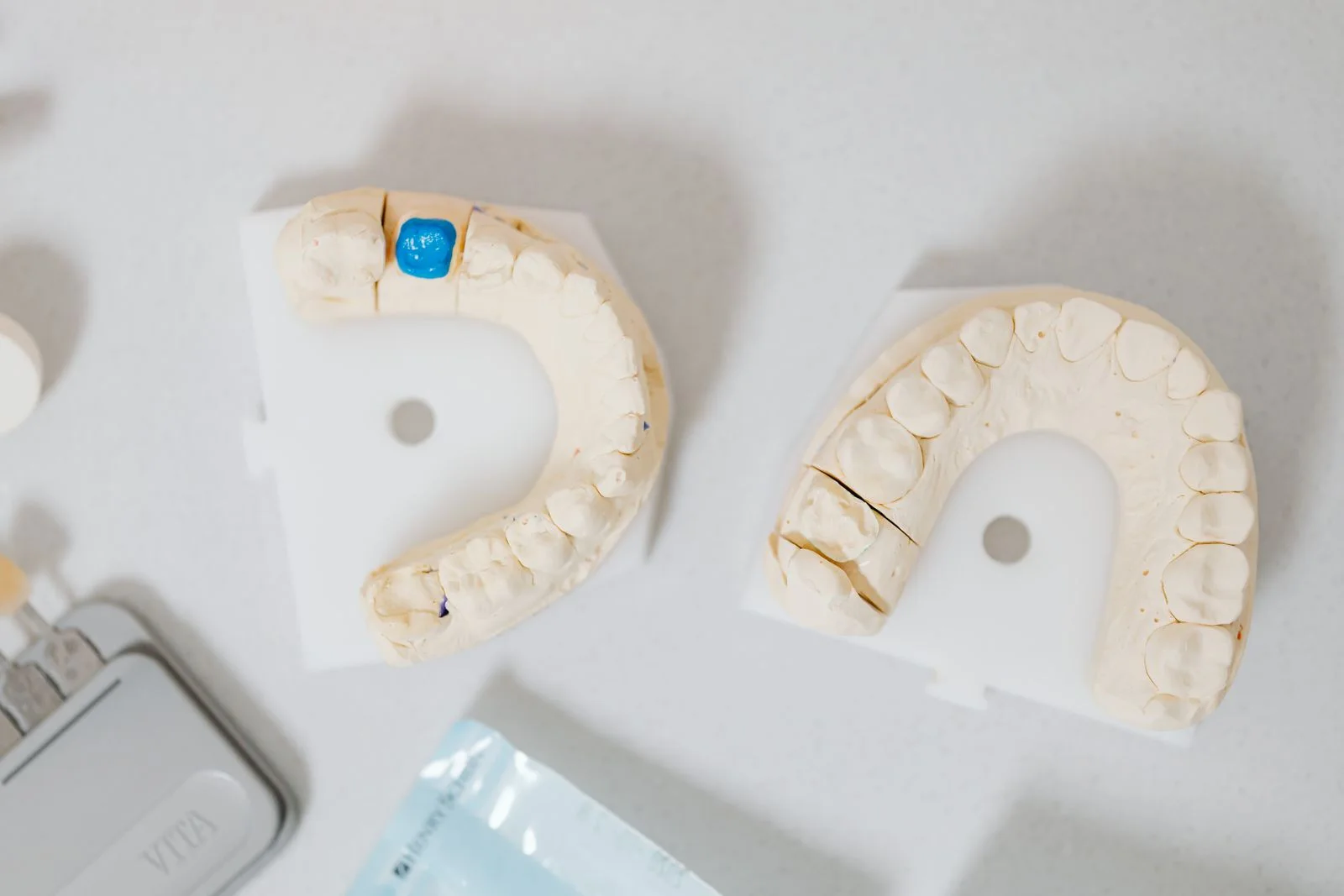
Stock photograph for illustration; not a participating clinic, practitioner, patient or treatment result. Photo: Kaboompics / Pexels.
Knowing which oral hygiene questions to raise with your orthodontic practitioner before and during treatment can make a meaningful difference to your experience. The short answer: ask your practitioner directly, in person, for cleaning instructions tailored to your specific appliance — because metal braces, ceramic braces, lingual braces and clear aligners each interact with teeth and gum tissue differently, and what works for one person’s mouth may not suit another’s.
Why appliance type shapes your hygiene routine
Orthodontists and dentists who provide orthodontic care work across several appliance categories. The Australian Society of Orthodontists identifies metal braces, ceramic braces, lingual braces and clear aligners as distinct treatment options. Ask the practitioner how the particular appliance proposed for you affects the instructions you should follow. Rather than copying a friend’s routine, ask for a demonstration relevant to your own appliance and for written instructions you can refer to afterwards.
Questions worth writing down before your consultation
Healthdirect Australia recommends writing down questions ahead of a health appointment and asking your practitioner to explain anything in plain language. This is practical advice for an orthodontic consultation, where a lot of new information arrives at once. Consider preparing questions such as:
- What cleaning tools are suitable for the appliance you are recommending for me?
- How often should I clean, and are there particular times of day that matter more?
- Are there food textures or habits that increase plaque build-up around this appliance type?
- What are the signs that my gum health is being affected during treatment, and what should I do if I notice them?
- Will my existing toothbrush and floss work, or do I need to change to interdental brushes or a different flossing method?
- What happens to my cleaning routine if I wear elastic bands or other auxiliaries?
This list is a starting point, not a complete or personalised protocol. Your practitioner will adapt the conversation to your mouth.
Request individual instructions — not just a printed sheet
Printed hygiene sheets are a useful memory aid, but they are written for a general audience. At your appointment, ask your practitioner — or the clinical staff member they direct you to — to demonstrate the technique for your specific appliance on a model or in your own mouth. Ask what to watch for if something changes: for instance, if a bracket debonds or an aligner tray develops a sharp edge. Individual instruction is particularly useful when transitioning between appliance stages, such as moving from active treatment to retainers, where the cleaning demands shift again.
Hypothetical scenario (illustrative, not a customer story): Imagine a person who has had metal braces fitted and assumes their regular brushing routine is sufficient. At a check-up, their practitioner points out plaque accumulation around the bracket bases that the person had not noticed. The practitioner demonstrates a different brushing angle using a model and recommends interdental brushes for the spaces between brackets. This kind of in-chair correction is only possible with an in-person consultation — it cannot be replicated by reading a guide like this one.
Coordinate with your general dentist
Orthodontic treatment does not replace your regular dental check-ups. Your orthodontic practitioner and your general dentist have distinct but overlapping interests in your oral health during treatment. It is worth asking your orthodontist:
- How often should I continue seeing my general dentist during treatment?
- Is there anything specific you would like me to tell my dentist about my appliance or treatment stage?
- If my dentist identifies a problem such as a cavity or gum inflammation, how does that affect my orthodontic treatment timeline?
Some practitioners send a brief to the patient’s regular dentist; others expect the patient to coordinate independently. Clarifying this early avoids gaps in care. For more background on how these two roles relate, see our guide on orthodontist and dentist roles: questions to ask.
Understanding the written treatment plan
The Australian Society of Orthodontists advises that patients ask about a written treatment plan covering their appliance, visits, retainers, replacement retainers and follow-up. When you receive this plan, it is an opportunity to ask where oral hygiene fits into it. Specifically:
- At which appointments will my hygiene be reviewed?
- What criteria does the practice use to identify when hygiene-related risks require a pause or change in treatment?
- What is the protocol if I develop a hygiene-related issue such as a white spot lesion?
These are not questions this site can answer — they depend on the individual practitioner’s clinical approach and your own dental history.
Verifying your practitioner’s registration
Before any consultation, it is straightforward to check that your practitioner holds current registration. Ahpra and the National Boards maintain a public register of dental practitioners, including those with specialist registration in orthodontics. Search the individual’s name, not just the practice or business name. Registration status is factual and publicly accessible; it does not represent endorsement by any referral website, including this one.
What this site does and does not provide
DentalFox Orthodontics is a lead-referral website based in Adelaide. You can enquire about a consultation, with any referral subject to availability. We do not provide clinical care, assess suitability or give hygiene instructions. The Australian Dental Association recommends in-person assessment and supervision by a registered practitioner rather than self-directed orthodontic decisions — that guidance applies equally to hygiene planning, which is best done chair-side, not by reading a web article.
If you are preparing for a first appointment or returning to orthodontic care as an adult, our related guides may help you frame the broader conversation:
- What orthodontics means before a consultation
- First orthodontic consultation preparation
- Orthodontic assessment and records questions
To connect with a practitioner and arrange a consultation enquiry, visit our Braces Consultation Enquiries or Adult Orthodontic Consultation Enquiries pages.
Further reading
- Australian Society of Orthodontists, Treatment Comparison Table: https://orthodonticsaustralia.org.au/wp-content/uploads/2020/01/ASO_Treatment-Comparison_Table_A4_V24.pdf
- Australian Dental Association, Teeth Straightening and Braces: https://teeth.org.au/teeth-straightening-and-braces
- Healthdirect Australia, Questions to ask your doctor: https://www.healthdirect.gov.au/healthcare-and-services/general-health/questions-to-ask-your-doctor
- Ahpra Registers of Practitioners: https://www.ahpra.gov.au/Registration/Registers-of-Practitioners/Professions-and-Divisions.aspx
Sources and further reading
- Professional dental information — ASO_Treatment Comparison_Table_A4_V24.pdf
- healthdirect Australia — questions to ask your doctor
- Professional dental information — 2019 09 OA Orthodontics Checklist A4 concepts_v2.pdf
- Ahpra practitioner information — Professions and Divisions.aspx
- Australian Dental Association — teeth straightening and braces
Source links provide background, not an endorsement or clinical review of this page. Read our editorial approach.