
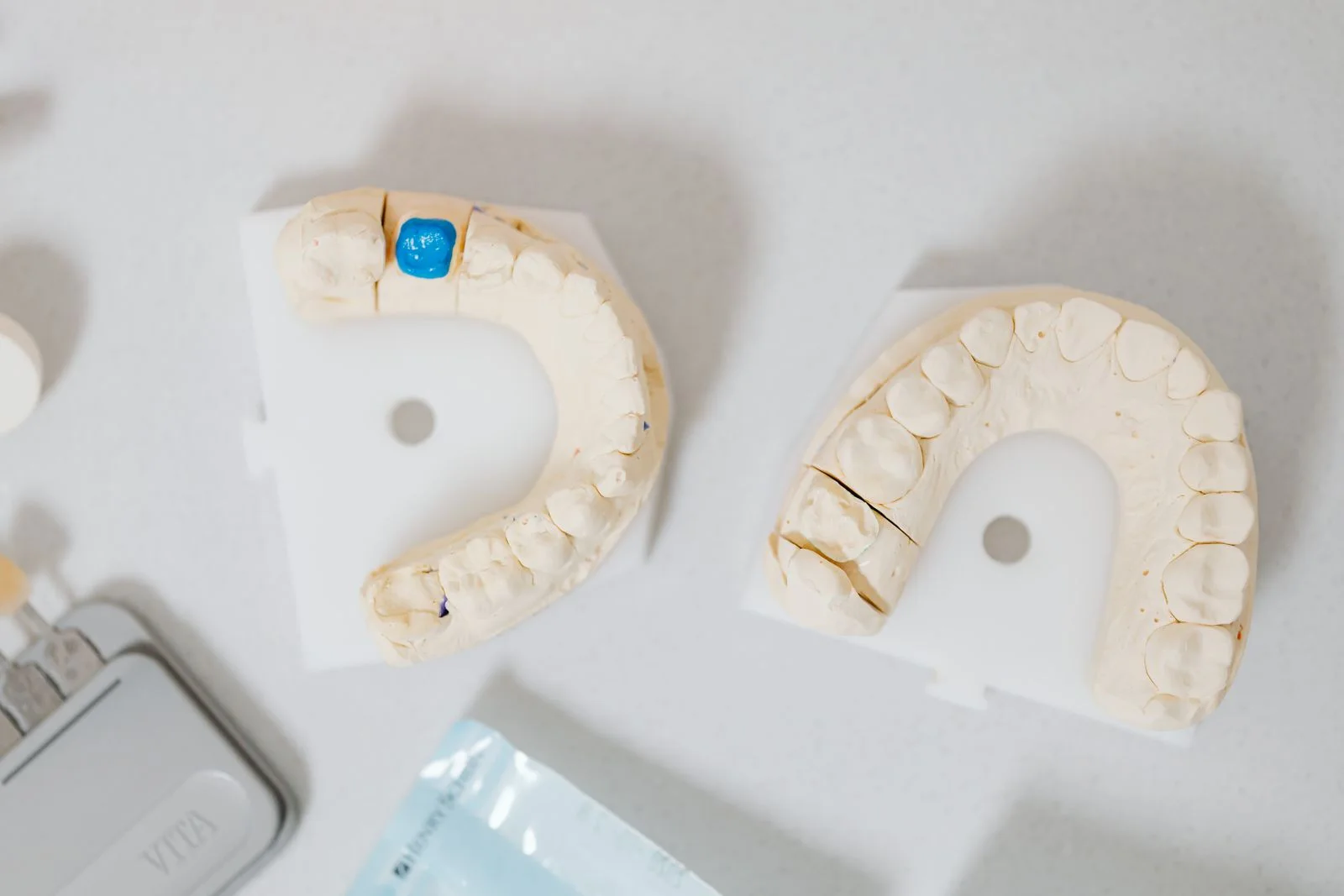
Stock photograph for illustration; not a participating clinic, practitioner, patient or treatment result. Photo: Kaboompics / Pexels.
What these questions are actually for
If you’re preparing to see an orthodontist or dentist about crowded teeth, knowing what to ask turns a brief appointment into a genuinely useful conversation. Crowded teeth — where teeth overlap, rotate, or sit unevenly because of insufficient space — is one of the most common reasons people seek orthodontic advice. The questions below help you describe your concern accurately, understand what a professional assessment involves, and explore the options available. Only a registered practitioner who examines you in person can advise on suitability, treatment planning or timing.
See also: What orthodontics means before a consultation for a broader orientation.
Describing your concern clearly before the appointment
A practitioner can gather information much faster when you arrive with a clear description ready. Before your consultation, take a moment to notice and note:
- Which area concerns you most — front teeth, back teeth, upper arch, lower arch, or all of these.
- What you can feel — teeth that feel jammed together, edges that catch food, difficulty flossing in certain spots.
- What prompted you to act now — a dentist’s comment, a change you’ve noticed, or a long-standing concern you’ve decided to address.
- Any related jaw or bite issues — clicking, discomfort when chewing, or a sense that your teeth don’t meet evenly.
- Your dental history — previous extractions, retained baby teeth, past orthodontic treatment, or significant restorations.
Writing this down beforehand is a practical step recommended by health consumer guidance: it helps you remember details under time pressure and ensures the practitioner starts with the clearest possible picture. Healthdirect Australia suggests writing down questions in advance and asking for explanations in plain language if clinical terms are unclear.
Questions to ask about the professional assessment itself
The consultation is also the right moment to understand what the assessment process involves. Useful questions include:
- What records will be taken today, and what records might be needed before a treatment plan is prepared?
- Will I receive a written summary of findings and a treatment plan in writing?
- Do I need a referral from my general dentist before or after this appointment?
- Are you a registered specialist orthodontist, or a general dentist providing orthodontic treatment? (You can verify any Australian dental practitioner’s registration independently through the Ahpra public register, which lists both general and specialist registrations.)
- If I have a complex bite issue as well as crowding, is a specialist referral appropriate?
Understanding orthodontist and dentist roles before you attend can help you ask these questions with more confidence.
Questions about appliance options
The Australian Society of Orthodontists identifies several broad appliance categories used in orthodontic treatment: metal braces, ceramic braces, lingual braces, and clear aligners. Each category has different characteristics worth discussing. Useful questions include:
- Which appliance types are you recommending for my situation, and why?
- What are the differences between fixed braces and removable clear aligners for someone with crowding like mine?
- Are there types of crowding or bite issues for which some options are less suitable?
- If I prefer a less visible option, what are the trade-offs compared to conventional braces?
The Australian Dental Association notes that both braces and clear aligners are orthodontic options, and that individual suitability advice comes from an in-person assessment by a dentist or orthodontist. If you’re specifically interested in one appliance type, you can read more via our Braces Consultation Enquiries and Clear Aligner Consultation Enquiries pages.
Questions about the written treatment plan and quote
Before committing to any course of treatment, it’s reasonable to ask for a written plan and a detailed quote. The Australian Society of Orthodontists publishes a cost checklist that prompts patients to ask about what a quote includes — covering items such as the initial assessment, records (X-rays, photographs, models), the appliance itself, routine adjustment visits, retainers at the end of active treatment, replacement retainer costs, and any follow-up after treatment ends. Suggested questions:
- What does your quote include, and what might cost extra?
- What happens to the cost if my treatment takes longer than planned?
- What is the retainer arrangement after active treatment finishes?
- Is there a payment plan, and are there any conditions attached to it?
Questions about realistic expectations and limitations
This is an area where patients often don’t ask enough. Orthodontic treatment addresses the position of teeth and bite function, but it has limits, and your practitioner is the right person to explain them honestly. Consider asking:
- After treatment, will my teeth stay in their new position without consistent retainer wear?
- Are there aspects of my crowding that orthodontic treatment cannot address on its own?
- If I have gum or bone concerns, do I need to see a periodontist first?
- What happens if I stop treatment partway through?
The ADA notes that in-person assessment and supervision are important, and cautions against unsupervised or DIY approaches to teeth movement — a useful point to keep in mind if you encounter direct-to-consumer options online.
A hypothetical scenario: how question preparation changes a consultation
This is a hypothetical example for illustration only, not a customer story.
Imagine someone who has noticed their lower front teeth have become more crowded over the past few years. Without preparation, the consultation might focus only on what can be seen in the chair. If they arrive having noted that the crowding seems worse since a lower wisdom tooth appeared, that they find flossing almost impossible between two specific teeth, and that their dentist mentioned gum health concerns at the last check-up, the practitioner immediately has richer information. This could lead to a discussion about sequencing — whether a dental hygiene review is appropriate before orthodontic records are taken — that might otherwise not have arisen. It also gives the patient a clear agenda: they want to know whether fixed braces or aligners suit their situation, what the retainer plan will be, and whether the cost quote covers everything. The appointment becomes a two-way conversation rather than a passive examination.
Before you attend: a quick preparation checklist
- Write down your main concern in one or two sentences
- Note which teeth or areas bother you and why
- List any previous dental or orthodontic treatment
- Write your questions about appliance types, assessment process, and what the quote covers
- Check the practitioner’s registration on the Ahpra public register
- Decide whether you want someone with you to take notes
For more on what to expect before you go in, see our guide to first orthodontic consultation preparation and orthodontic assessment and records questions.
If you’re ready to take the next step, you can submit a consultation enquiry to be connected with an orthodontic practice in Adelaide.
Further reading
- Australian Society of Orthodontists – Treatment Comparison: https://orthodonticsaustralia.org.au/wp-content/uploads/2020/01/ASO_Treatment-Comparison_Table_A4_V24.pdf
- Australian Society of Orthodontists – Cost Checklist: https://orthodonticsaustralia.org.au/wp-content/uploads/2019/11/2019-09-OA-Orthodontics-Checklist-A4-concepts_v2.pdf
- Australian Dental Association – Teeth Straightening and Braces: https://teeth.org.au/teeth-straightening-and-braces
- Healthdirect Australia – Questions to ask your doctor: https://www.healthdirect.gov.au/healthcare-and-services/general-health/questions-to-ask-your-doctor
- Ahpra Practitioner Register: https://www.ahpra.gov.au/Registration/Registers-of-Practitioners/Professions-and-Divisions.aspx
Sources and further reading
- Australian Dental Association — teeth straightening and braces
- Professional dental information — ASO_Treatment Comparison_Table_A4_V24.pdf
- Professional dental information — 2019 09 OA Orthodontics Checklist A4 concepts_v2.pdf
- healthdirect Australia — questions to ask your doctor
- Ahpra practitioner information — Professions and Divisions.aspx
Source links provide background, not an endorsement or clinical review of this page. Read our editorial approach.