
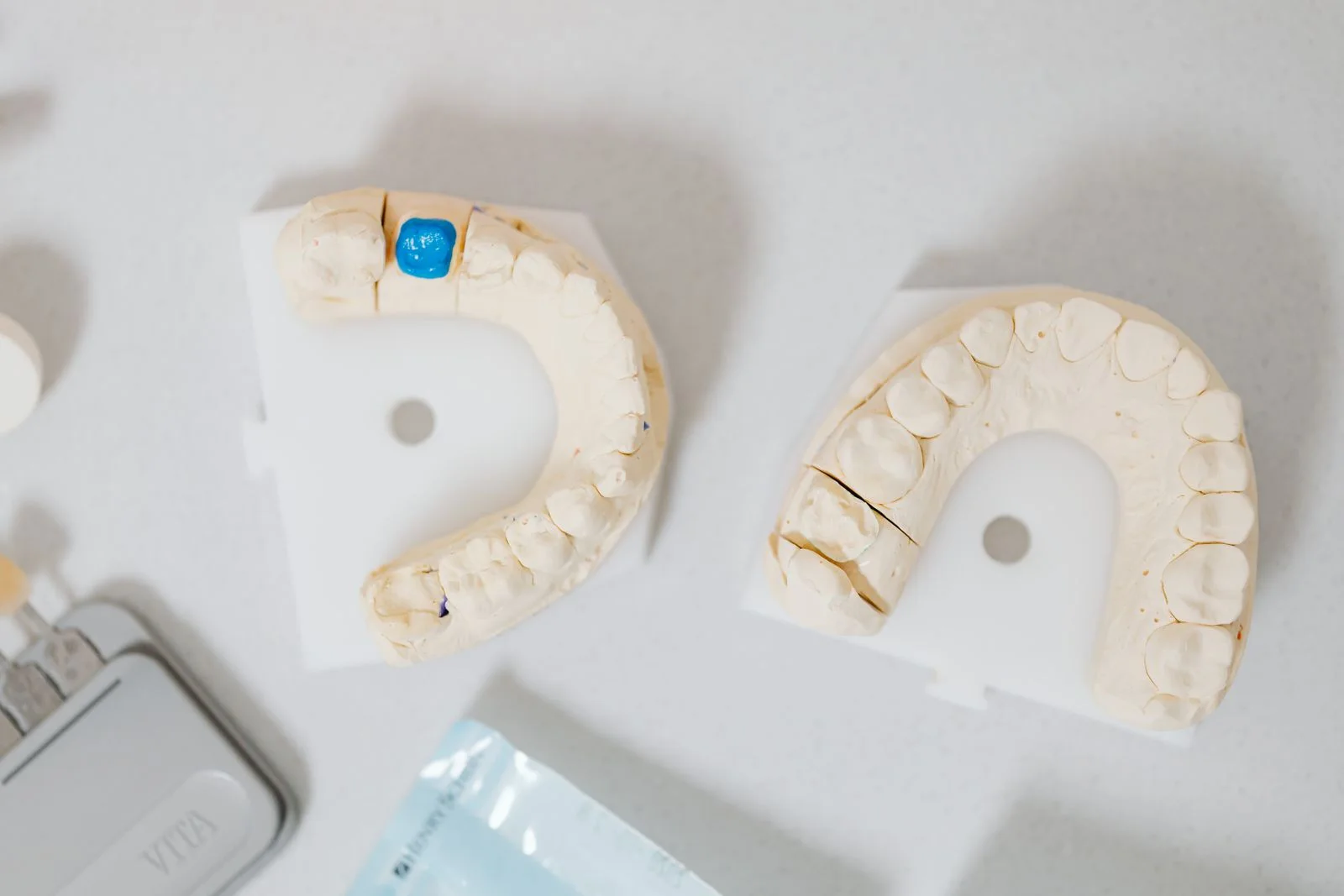
Stock photograph for illustration; not a participating clinic, practitioner, patient or treatment result. Photo: Kaboompics / Pexels.
Why preparation matters before discussing teeth spacing
If you are wondering what to ask at an orthodontic consultation about gaps or spacing between your teeth, the most useful starting point is to arrive with specific, written questions. Teeth spacing orthodontics covers a broad range of presentations — single gaps, generalised spacing across the arch, and combinations of spacing in one area alongside crowding elsewhere — so a prepared list keeps the conversation focused and helps you leave with genuinely useful information rather than a vague impression.
This guide is published by a lead-referral website, not a treating practice. Nothing here constitutes a diagnosis or replaces the clinical assessment of a registered dental practitioner or orthodontist.
How to describe your spacing concern clearly
Before you can ask the right questions, it helps to describe your concern in terms the practitioner can work with. Consider noting:
- Location – Is the gap between your two front teeth, at the sides, or spread across multiple teeth?
- Duration – Has the gap always been present, or has it appeared or widened over time?
- History – Have you had a tooth extracted, lost a baby tooth early, or worn a retainer that you stopped using?
- Function or comfort – Do you notice food trapping, difficulty biting, or gum sensitivity around the gap?
- Previous orthodontic treatment – Have you had braces or aligners before? Do you still have retainers?
Writing this down before the appointment means you will not forget details under time pressure. Healthdirect Australia advises patients generally to write down questions and ask for explanations in understandable language before any healthcare consultation.
Questions about the nature of your spacing
At the consultation itself, your questions about the cause and type of spacing might include:
- Is this spacing due to tooth size, jaw size, or both?
- Is there a missing or unerupted tooth contributing to the gap?
- Is there any sign that the gap has been changing — and if so, what might be driving that?
- Does this spacing affect my bite, jaw joints, or gum tissue in any way you can see today?
- Would a referral to a periodontist, oral surgeon or another specialist be relevant before orthodontic treatment?
These questions are not for self-diagnosis. They are prompts to help you understand the clinical picture the practitioner is describing.
Questions about appliance options
The Australian Society of Orthodontists identifies several broad appliance categories used in orthodontics: metal braces, ceramic braces, lingual braces (fitted to the inside surface of teeth), and clear aligners. That list of categories does not indicate which is appropriate for any individual — that judgement belongs to the treating practitioner after proper assessment.
Useful questions to bring:
- Which appliance types are being considered for my situation, and why?
- Are there any appliance types that would not be suitable for my spacing, and can you explain the reason?
- How does each option typically manage spacing — through tooth movement, arch expansion, or a combination?
- If clear aligners are an option, what does “full case” versus “limited” treatment mean in my context?
- Will I need any additional appliances such as elastics, temporary anchorage devices or expanders?
The Australian Dental Association notes that a dentist or orthodontist advises individual suitability for clear aligners, and recommends in-person assessment rather than remote or self-directed orthodontics.
See also: Orthodontist and dentist roles — questions to ask
Questions about the treatment plan and records
A written treatment plan and records (which may include X-rays, photographs and study models or digital scans) are a standard part of an orthodontic consultation. The Australian Society of Orthodontists’ cost checklist prompts patients to ask specifically about assessment, records, appliances, visits, retainers, replacement retainers and follow-up inclusions — and to confirm what is and is not covered in any quoted fee.
Prepare to ask:
- What records will be taken today, and do any require a separate appointment?
- Will I receive a written treatment plan?
- How will progress be monitored, and how often would I be seen?
- What happens at the end of active treatment — what does retention look like for spacing cases?
- If a gap reopens after treatment, what options exist?
See also: Orthodontic assessment and records questions
A hypothetical scenario to illustrate preparation (not a real case)
Imagine a person in their late twenties who has noticed a gap between their upper front teeth that seems slightly wider than it was a few years ago. They are unsure whether this is linked to a retainer they stopped wearing, a previous extraction on the lower arch, or simply natural change. By arriving with written notes covering location, timing, treatment history and their specific concern about the gap widening, they give the practitioner the context needed to explain findings clearly. Without that preparation, the appointment might spend most of its time gathering background rather than answering the questions that actually matter to that person.
Checking practitioner registration
In Australia, orthodontists hold specialist registration, which is distinct from general dental registration. Ahpra and the National Boards maintain public registers of dental practitioners, including specialist registration. You can search the register by the individual practitioner’s name — registration is listed against the person, not just the business name.
This referral website does not endorse or validate any individual practitioner. Checking the register is a step you can take independently before or after any referral.
See also: What orthodontics means before a consultation
Questions about cost and what is included
Cost is a reasonable and practical topic for the consultation. Without copying any specific figures — which change, vary by case complexity and are not ours to publish — the questions worth asking include:
- Does the quoted fee include all records, active treatment, retainers and scheduled follow-up visits?
- Are there separate charges if an appliance breaks or needs replacement?
- What would happen to costs if treatment takes longer than initially planned?
- Are payment plan arrangements available, and are there any conditions attached?
The ASO checklist approach — confirming each inclusion in writing — protects against unexpected costs later.
See also: First orthodontic consultation preparation
If you are ready to take the next step, you can request a consultation enquiry through this site, or explore options through adult orthodontic consultation enquiries or clear aligner consultation enquiries.
Further reading
- Australian Dental Association — Teeth straightening and braces
- Australian Society of Orthodontists — Treatment comparison overview
- Australian Society of Orthodontists — Orthodontic cost checklist
- Healthdirect Australia — Questions to ask your doctor
- Ahpra — Registers of practitioners
Sources and further reading
- healthdirect Australia — questions to ask your doctor
- Professional dental information — ASO_Treatment Comparison_Table_A4_V24.pdf
- Australian Dental Association — teeth straightening and braces
- Professional dental information — 2019 09 OA Orthodontics Checklist A4 concepts_v2.pdf
- Ahpra practitioner information — Professions and Divisions.aspx
Source links provide background, not an endorsement or clinical review of this page. Read our editorial approach.