
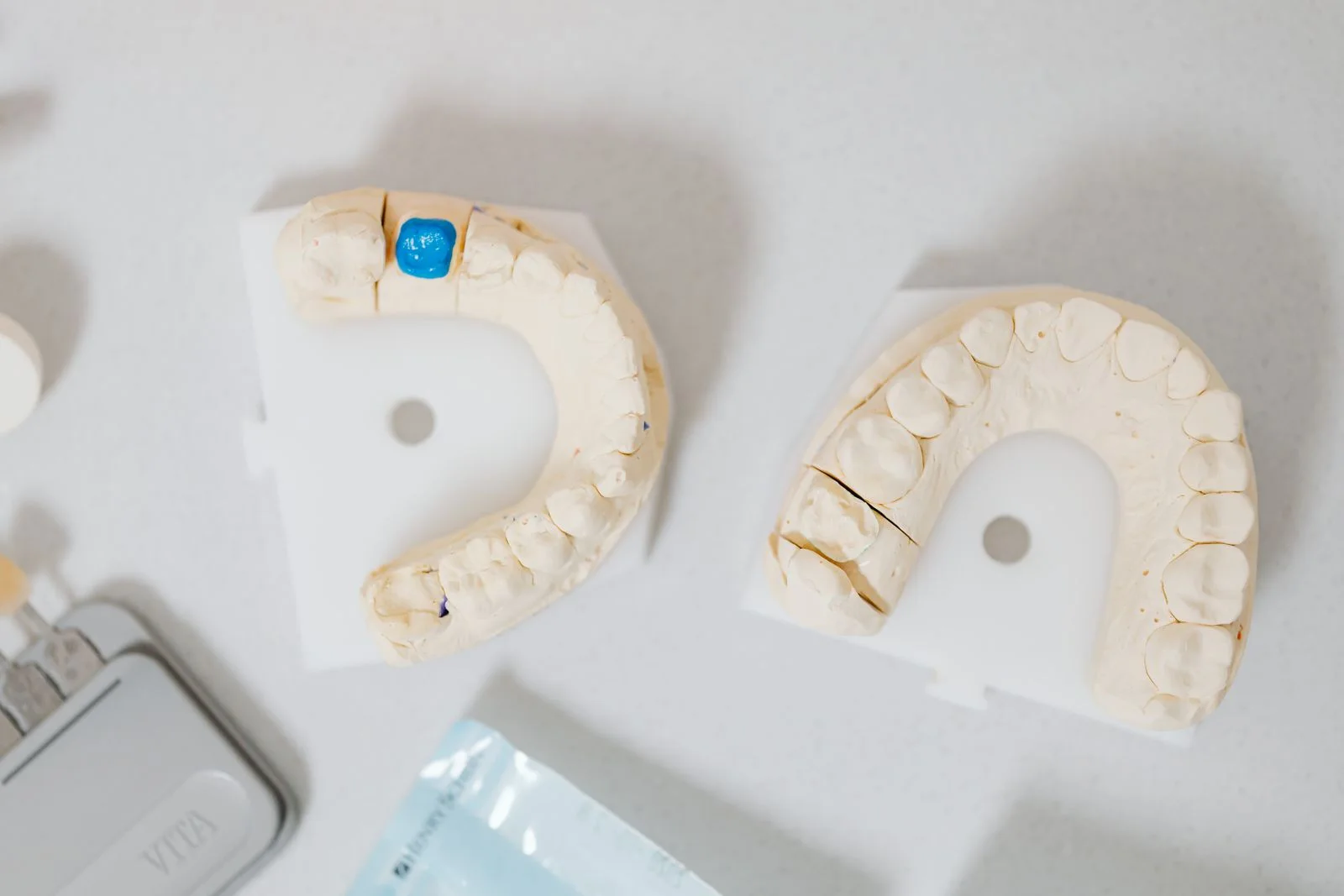
Stock photograph for illustration; not a participating clinic, practitioner, patient or treatment result. Photo: Kaboompics / Pexels.
How long does orthodontic treatment actually take?
Orthodontic treatment time varies considerably from person to person, and no general article can tell you how long your own treatment will take. The honest short answer is: it depends on the complexity of your bite and tooth position, the appliance chosen, and how consistently you follow the plan. The purpose of this guide is to help you understand why duration varies and what questions to raise at your consultation so you leave with a clear picture.
Why orthodontic treatment time is individual
Orthodontics concerns tooth alignment and the relationship between the upper and lower jaws. Ask the practitioner which features of your assessment inform their duration estimate and how they will explain uncertainty. This website cannot estimate treatment time from a description or photograph.
If you are an adult, ask what your dental history and assessment mean for the proposed timeline. Avoid using a teenager’s experience or a general online estimate as a prediction of your own treatment.
The appliance type is another variable. The Australian Society of Orthodontists identifies metal braces, ceramic braces, lingual braces and clear aligners as the main treatment categories. Each has different mechanical properties and may suit different clinical presentations — but which is appropriate for a given person is a clinical judgement, not something a comparison table settles on its own.
See What orthodontics means before a consultation for a broader grounding in orthodontic terminology before your first appointment.
What your proposed treatment plan should tell you
Once a treating practitioner has taken records — typically photographs, X-rays and sometimes a scan — they will outline a proposed plan. This is the document you should read carefully and question before consenting to anything.
A treatment plan worth its name should address:
- Estimated duration — expressed as a range, not a fixed date, because tooth movement cannot be precisely scheduled
- Appliance type — which category of appliance is being proposed and why it suits your case
- Number of review appointments — how frequently you will need to attend and what happens at those visits
- What is and is not included in the quoted fee — retainers, replacement retainers, additional records, and emergency appointments may or may not be bundled
- What extends the timeline — for example, missed appointments, broken brackets or, with aligners, inconsistent wear
The Australian Society of Orthodontists cost checklist prompts patients to ask specific questions about assessment fees, appliance costs, the number of visits, retainers and follow-up care. Use it as a prompt, not an assumption that every item will apply to your plan.
Questions to raise about timing specifically
Armed with a proposed plan, there are several timing-related questions worth raising directly with your treating practitioner:
- What is the shortest and longest realistic timeline for my case? Ask for a range, not just a midpoint figure.
- What would cause treatment to run longer than estimated? Understanding the variables within your control (compliance with wear instructions, attendance at reviews) and outside your control (how your teeth respond to force) is genuinely useful.
- Are there phases to this treatment? Some cases involve an initial phase — for example, expansion — followed by a second phase of full alignment. Knowing this upfront avoids surprise.
- When does retention start, and how long does it last? Retention — usually with a retainer worn after active treatment — is an ongoing commitment. The active treatment period is not the whole story.
- How will we know if the plan needs to change? Bone response varies, and experienced practitioners adjust plans mid-treatment. Asking about this signals you understand treatment is dynamic.
Healthdirect Australia recommends writing questions down before appointments and asking for explanations in plain language — good advice for any health consultation.
See also First orthodontic consultation preparation for a broader list of consultation preparation strategies.
A hypothetical scenario: two people, different timelines
This is a hypothetical illustration, not a customer story or outcome claim.
Imagine two adults in Adelaide both enquiring about orthodontic treatment in the same month. The first has mild crowding of the front teeth only and no jaw discrepancy. The second has moderate crowding, a crossbite on one side, and a tooth that has not fully erupted into position. It would be clinically reasonable — in a hypothetical sense — for the first person’s proposed plan to have a shorter estimated duration than the second’s, even if both end up with the same appliance type. Neither person can know their own timeline until records are taken and assessed by a practitioner.
This illustrates why asking “how long does orthodontic treatment take in Adelaide?” cannot have a single answer, and why the consultation is the starting point, not a website guide.
Travel and scheduling considerations for Adelaide patients
For people travelling from outer suburbs or regional South Australia, the frequency of orthodontic review appointments is a practical concern. At initial consultation, it is worth asking:
- How far apart are routine review appointments?
- Can some reviews be conducted via telehealth or remote monitoring, or is every visit in-person?
- What is the protocol if you need to reschedule?
- Are there any phases of treatment where attendance is more frequent?
Some appliance types may have different review schedules than others — this is worth clarifying as part of understanding the full treatment commitment, not just the duration.
For more on how orthodontists and general dentists differ in scope and referral pathways, see Orthodontist and dentist roles questions to ask.
Payment plans and how duration intersects with cost
Orthodontic treatment fees are often structured across the treatment period. Where payment plans are offered, the number of instalments may be tied to the estimated treatment length. If treatment runs longer than anticipated, it is worth clarifying upfront whether fees change — or whether a quoted fee covers the full course of active treatment regardless of duration.
This is a financial question for the practice, not a clinical one. The ASO cost checklist is a useful prompt for ensuring you have asked about all fee components before signing a treatment agreement.
For adults weighing up options, Adult Orthodontic Consultation Enquiries explains how to make an enquiry; any referral is subject to confirmed availability.
Verifying who you are seeing
Orthodontists are registered dental specialists. General dentists may also provide orthodontic treatment within their scope. Ahpra and the National Boards maintain public registers of registered practitioners — you can search by name to confirm current registration and whether a specialist endorsement is held. This is worth doing as part of your due diligence, particularly when treatment involves a significant time and financial commitment.
Further reading
- Orthodontic assessment and records questions
- First orthodontic consultation preparation
- Braces Consultation Enquiries
- Clear Aligner Consultation Enquiries
Sources
- Australian Society of Orthodontists, Treatment Comparison Table: https://orthodonticsaustralia.org.au/wp-content/uploads/2020/01/ASO_Treatment-Comparison_Table_A4_V24.pdf
- Australian Society of Orthodontists, Orthodontics Checklist: https://orthodonticsaustralia.org.au/wp-content/uploads/2019/11/2019-09-OA-Orthodontics-Checklist-A4-concepts_v2.pdf
- Healthdirect Australia, Questions to ask your doctor: https://www.healthdirect.gov.au/healthcare-and-services/general-health/questions-to-ask-your-doctor
- Ahpra Registers of Practitioners: https://www.ahpra.gov.au/Registration/Registers-of-Practitioners/Professions-and-Divisions.aspx
- Australian Dental Association, Teeth straightening and braces: https://teeth.org.au/teeth-straightening-and-braces
Sources and further reading
- Professional dental information — ASO_Treatment Comparison_Table_A4_V24.pdf
- Professional dental information — 2019 09 OA Orthodontics Checklist A4 concepts_v2.pdf
- healthdirect Australia — questions to ask your doctor
- Ahpra practitioner information — Professions and Divisions.aspx
- Australian Dental Association — teeth straightening and braces
Source links provide background, not an endorsement or clinical review of this page. Read our editorial approach.