
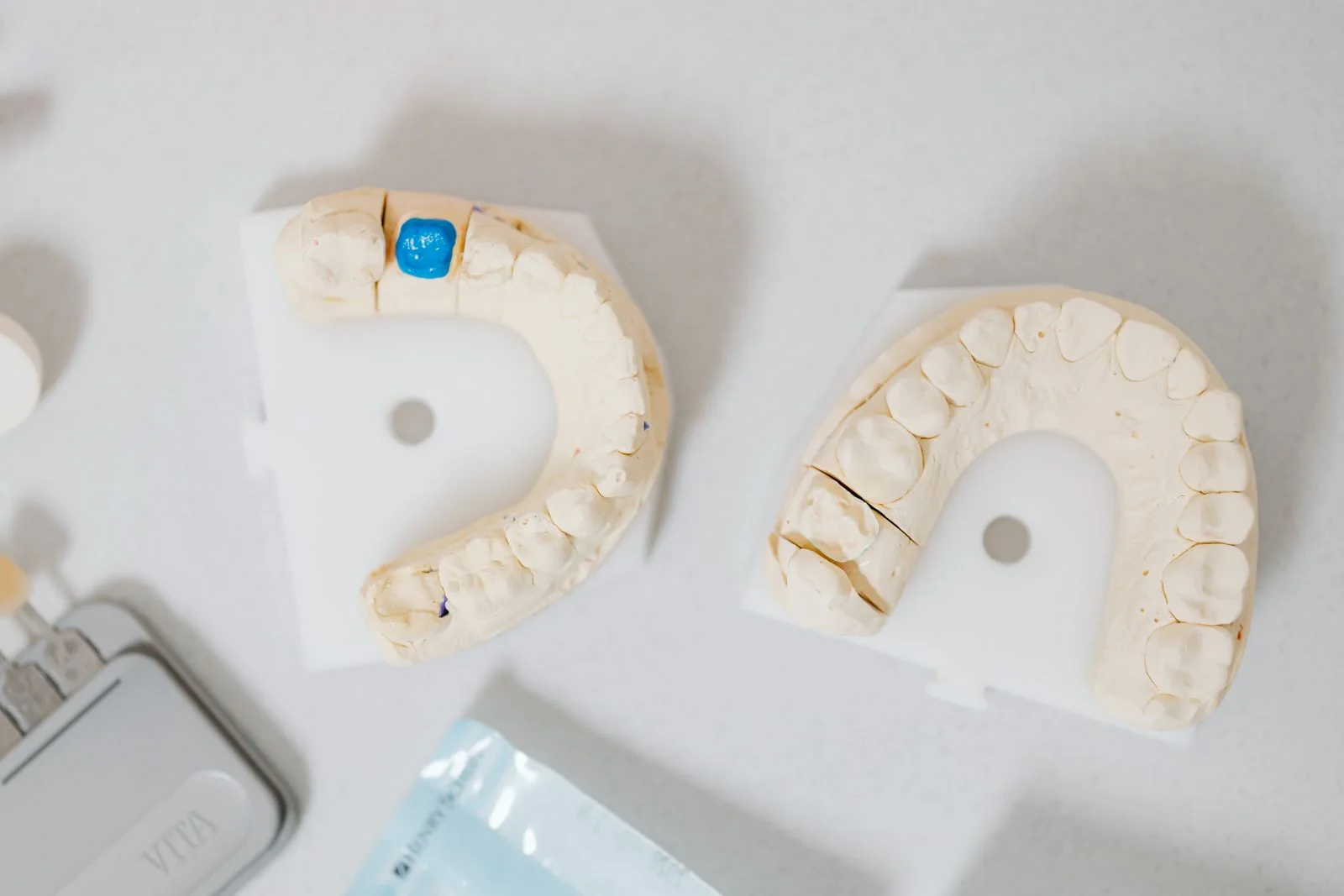
Stock photograph for illustration; not a participating clinic, practitioner, patient or treatment result. Photo: Kaboompics / Pexels.
What private health cover actually does (and doesn’t) guarantee
Private health insurance with extras cover may contribute to orthodontic treatment costs, but the benefit depends on your policy and the proposed treatment. Ask the fund for a benefit estimate using the treatment information supplied by your practitioner. Understanding those gaps before you book a consultation saves you from budgeting on assumptions that turn out to be wrong.
Ask your insurer whether your policy includes orthodontic benefits and which part of the cover applies to the treatment being proposed. The rebate your fund pays depends on your specific policy tier, any annual or lifetime limits that apply, how long you have held that level of cover, and the item numbers on the treatment plan your orthodontist or treating dentist provides.
Questions to ask your health fund first
Before your first consultation, contact your health fund directly with these questions rather than relying on a general policy brochure:
- Does my current extras tier include orthodontics? Some base-level extras policies exclude orthodontics entirely.
- Is there a lifetime limit, and how much of it have I already used? Ask about both annual arrangements and the overall lifetime limit, including previous claims.
- Is there a waiting period still running on my policy? Ask which waiting periods apply to you and how any change of fund or cover would affect them.
- Which item numbers attract a benefit? Ask specifically about item numbers your provider might use — the fund can confirm which ones appear on your schedule.
- Does the benefit change if the treating provider is an orthodontist versus a general dentist? Some policies treat these differently.
Writing your questions down before you call and asking for explanations in plain language — not insurance jargon — reduces the chance of misunderstanding a critical detail. This is a general principle recommended for navigating any health service interaction.
Questions to ask the treating orthodontist or dentist
Once you have your fund’s answers, your consultation with the treating practitioner is the right place to work through the clinical and financial details together. The Australian Society of Orthodontists publishes a checklist of cost-related questions that patients are encouraged to raise, including:
- What are the item numbers for the proposed treatment, so I can verify my fund benefit?
- Does the quoted fee include orthodontic records (X-rays, photographs, models or scans)?
- Are follow-up visits during active treatment included, or billed separately?
- Are retainers included in the quote, and what about replacement retainers if one is lost or damaged?
- What happens to the cost structure if treatment takes longer than initially outlined?
These are not questions this referral website can answer on your behalf — they depend on the specifics of your proposed treatment plan, which only the treating practitioner can determine after a proper assessment. See our guide on first orthodontic consultation preparation for how to make the most of that appointment.
What an itemised scope actually covers
An itemised treatment quote from an orthodontist or treating dentist is not simply a total figure — it should break down what is and is not included across the full course of care. The Australian Society of Orthodontists checklist specifically prompts patients to confirm whether each of the following is covered in a quote or priced separately:
- Initial assessment and diagnostic records
- The appliance itself (braces, aligners, lingual appliances)
- Scheduled review appointments during active treatment
- Removal of the appliance at the end of active treatment
- Retainers (and how many)
- Replacement retainers
- Post-treatment review visits
Hypothetical scenario (illustrative, not a real patient): Imagine two people receiving identical quotes in dollar terms. Person A’s quote bundles all appointments and two sets of retainers. Person B’s quote covers the appliance and standard visits only. If Person B needs a replacement retainer or additional appointments, the out-of-pocket difference could be substantial — and their health fund rebate applies only to what appears as a claimable item number on the invoice.
This illustrates why the total quoted figure is less informative than a line-by-line breakdown verified against your fund schedule.
Understanding lifetime limits and benefit gaps
The Commonwealth Ombudsman explains that orthodontic benefits can have both yearly arrangements and an overall lifetime limit. These are not an either/or choice. Ask your fund how the limits work together, how previous claims affect you, and what happens if you change cover.
This has practical implications:
- Adults considering orthodontics may have already claimed part of a lifetime limit from childhood treatment. Adults exploring options can read more in our guide on adult orthodontic consultation enquiries.
- Children starting treatment early may have their lifetime limit partially or fully consumed before any adult treatment they might need later.
- Couples on the same policy may share a combined limit or hold individual limits depending on their policy structure — worth confirming with the fund.
The gap between what a fund pays and what a provider charges (the benefit gap or out-of-pocket cost) is a normal feature of the Australian extras system, not an error. Ask your fund to explain the amount payable under your actual policy rather than assuming it covers the full provider fee.
Payment plans and out-of-pocket costs
Ask the practice whether it offers a payment arrangement and what it would involve. The specific terms of any payment plan — deposit requirements, instalment frequency, whether interest applies — are a matter to discuss directly with the treating practice, not something a referral website can confirm or recommend.
If a payment plan is important to your planning, include it explicitly in your list of questions for the consultation. See our braces consultation enquiries and clear aligner consultation enquiries pages if you are ready to take the next step.
Verifying who you are seeing
Orthodontists are registered dental specialists. General dentists may also provide some orthodontic treatment. The distinction can affect both clinical scope and how your health fund classifies the claim. You can check whether a practitioner holds specialist registration on the Ahpra public register by searching the individual’s name — the register records their division and specialty. Business names alone do not confirm specialist status.
For more on this distinction, see Orthodontist and dentist roles: questions to ask.
No rebate is guaranteed until you check the specifics
The central point of any orthodontic insurance conversation is this: general information about what extras cover typically includes is not a substitute for checking your actual policy against the actual item numbers in your actual treatment quote. Each of those three variables can change the rebate you receive.
The most reliable sequence is: (1) confirm your fund entitlements before the consultation; (2) obtain an itemised written quote from the treating practitioner after your assessment; (3) submit the item numbers to your fund to confirm the exact benefit payable before committing to treatment.
If you are ready to begin that process, request a consultation enquiry to connect with a local Adelaide orthodontic practice.
Further reading
-
Australian Society of Orthodontists – Patient Cost Checklist: https://orthodonticsaustralia.org.au/wp-content/uploads/2019/11/2019-09-OA-Orthodontics-Checklist-A4-concepts_v2.pdf
-
Australian Society of Orthodontists – Adults and Orthodontics eBook: https://orthodonticsaustralia.org.au/wp-content/uploads/2018/04/eBook-Adults-Orthodontics.pdf
-
Ahpra Practitioner Register: https://www.ahpra.gov.au/Registration/Registers-of-Practitioners/Professions-and-Divisions.aspx
-
Commonwealth Ombudsman — Orthodontic Treatment (benefit limits and treatment-plan information; checked 4 November 2026).
Sources and further reading
- Australian Dental Association — teeth straightening and braces
- Professional dental information — 2019 09 OA Orthodontics Checklist A4 concepts_v2.pdf
- healthdirect Australia — questions to ask your doctor
- Ahpra practitioner information — Professions and Divisions.aspx
Source links provide background, not an endorsement or clinical review of this page. Read our editorial approach.