
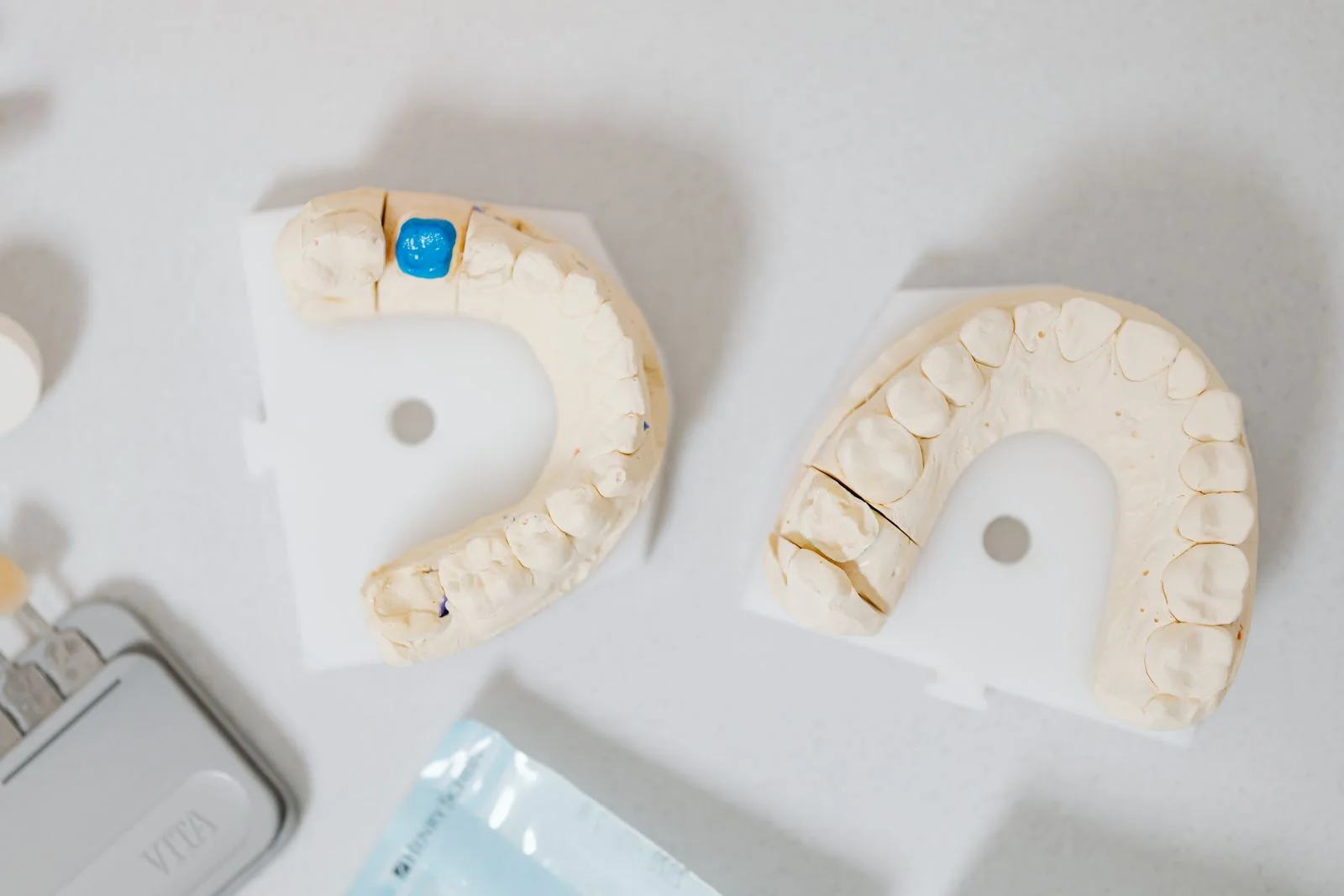
Stock photograph for illustration; not a participating clinic, practitioner, patient or treatment result. Photo: Kaboompics / Pexels.
If you are preparing for an underbite orthodontics consultation, the most useful thing you can do beforehand is write down specific questions about terminology, the assessment process, and your treatment options. This guide explains what an underbite actually is in clinical language, how orthodontic practitioners assess it, and which questions are worth raising — so you can make the most of limited consultation time with a qualified dental professional in Adelaide.
What “underbite” actually means clinically
Underbite is a general term used when lower front teeth sit ahead of upper front teeth. Ask the practitioner what they mean by the term in your own assessment and whether they are describing tooth positions, jaw relationships or both. Do not infer a diagnosis from a general description.
This distinction matters because different anatomical causes lead to different management conversations. An underbite can result from the position of the teeth themselves (dentoalveolar), from jaw-bone discrepancy (skeletal), or from a combination of both. Understanding which category applies to you can only be determined through clinical examination and records — not from a photo or a website.
See our companion guide, What orthodontics means before a consultation, for a broader glossary of bite terminology.
How an underbite differs from an overbite or crossbite
These three terms are often confused:
- Underbite: Lower front teeth project ahead of upper front teeth
- Overbite: Upper front teeth overlap the lower front teeth vertically to a degree considered excessive — a vertical rather than horizontal concern
- Crossbite: One or more upper teeth sit inside (behind) lower teeth; can occur at the front or the sides
In practice, a single patient may have elements of more than one of these. That is why practitioners use full records — radiographs, clinical measurements, and digital or plaster models — rather than visual inspection alone. Orthodontics concerns the alignment of both teeth and bite, and an accurate classification informs what options a practitioner will discuss with you.
What a professional assessment typically involves
Ask the practitioner what records are appropriate to your individual assessment, what each proposed record is intended to show and how the findings will be explained. If they mention an unfamiliar imaging term, ask for a plain-language explanation rather than assuming a particular scan is standard or required for everyone.
The Australian Society of Orthodontists (ASO) acknowledges that orthodontic treatment options include metal braces, ceramic braces, lingual braces, and clear aligners. No single appliance category is universally appropriate — suitability depends on the clinical findings from that records process. This referral website does not determine which option is right for any individual; that is a conversation for a registered practitioner.
For a broader look at what records and assessment involve, see Orthodontic assessment and records questions.
Verifying your practitioner’s registration
Orthodontists are dental specialists who have completed additional postgraduate training beyond their initial dental degree. General dentists may also provide some orthodontic treatment. Both groups are registered through Ahpra (the Australian Health Practitioner Regulation Agency). The Ahpra public register allows you to look up an individual practitioner by name and confirm whether they hold specialist registration in orthodontics or general dental registration. Checking the named individual — not just the practice name — is recommended before attending any consultation.
See Orthodontist and dentist roles questions to ask for guidance on understanding how these two roles differ.
A written question list to take to your appointment
Healthdirect Australia recommends writing down your questions before a healthcare appointment and asking for explanations in plain language. The following list is a starting point — adapt it to your own situation, and add anything your GP or dentist has already flagged.
About your specific bite:
- Is this a dental (tooth-position) underbite, a skeletal (jaw-bone) underbite, or both?
- Which teeth or jaw structures are involved?
- What records will you need before discussing options?
About appliance options:
- Which appliance categories are potentially appropriate for my case — braces, clear aligners, or others?
- Are there options I am not a candidate for, and why?
- If jaw growth is still occurring (for younger patients), does timing affect what options are available?
About the treatment plan:
- Will I receive a written treatment plan?
- Does treatment involve any referral to another specialist, such as an oral surgeon or periodontist?
- What does retention involve after active treatment ends, and what are the arrangements for replacement retainers?
About costs and inclusions:
- What does the quoted fee include — records, appliances, adjustment visits, and retainers?
- What would be an additional cost if circumstances change during treatment?
The ASO’s cost checklist prompts questions about records fees, appliance fees, retainers, and follow-up — confirming what is and is not included in a written quote is a standard, reasonable step before proceeding.
A hypothetical scenario to illustrate preparation value
Note: The following is hypothetical and does not represent any real patient.
Imagine someone attending a first consultation having only written “my bottom teeth stick out” in a referral form. The practitioner spends part of the appointment clarifying what type of underbite is present, whether jaw surgery is a conversation worth having, and what records are needed before options can be named. Now imagine the same person arriving with the written questions above. The practitioner can move more quickly to record-taking and explaining what each finding means, and the person leaves with a clearer picture of next steps. Preparation does not replace clinical judgement — it creates space for a more productive conversation.
Preparing for an adult underbite consultation specifically
For an adult underbite consultation, ask how the practitioner distinguishes the concerns being assessed, what options they consider appropriate and whether input from another practitioner is needed. This guide cannot determine whether tooth movement, surgery or another approach should be considered for you.
This does not mean surgery is required — that depends entirely on clinical findings. But understanding that the conversation may be on the table helps adults prepare questions in advance. See our guide First orthodontic consultation preparation for broader appointment-readiness advice.
Finding a consultation enquiry pathway in Adelaide
If you are ready to connect with an orthodontic provider in Adelaide to discuss an underbite, DentalFox Orthodontics operates as a lead-referral service to help you reach relevant practitioners. You can submit a Braces Consultation Enquiry, a Clear Aligner Consultation Enquiry, or an Adult Orthodontic Consultation Enquiry depending on what aligns with your starting questions. DentalFox is not itself a treating practice and does not perform clinical assessments or recommend specific treatment.
Further reading and sources
- Australian Society of Orthodontists – Treatment Comparison: https://orthodonticsaustralia.org.au/wp-content/uploads/2020/01/ASO_Treatment-Comparison_Table_A4_V24.pdf
- Australian Dental Association – Teeth straightening and braces: https://teeth.org.au/teeth-straightening-and-braces
- Healthdirect Australia – Questions to ask your doctor: https://www.healthdirect.gov.au/healthcare-and-services/general-health/questions-to-ask-your-doctor
- Ahpra Registers of Practitioners: https://www.ahpra.gov.au/Registration/Registers-of-Practitioners/Professions-and-Divisions.aspx
- Australian Society of Orthodontists – Orthodontics Checklist: https://orthodonticsaustralia.org.au/wp-content/uploads/2019/11/2019-09-OA-Orthodontics-Checklist-A4-concepts_v2.pdf
Sources and further reading
- Professional dental information — ASO_Treatment Comparison_Table_A4_V24.pdf
- Professional dental information — 2019 09 OA Orthodontics Checklist A4 concepts_v2.pdf
- healthdirect Australia — questions to ask your doctor
- Australian Dental Association — teeth straightening and braces
- Ahpra practitioner information — Professions and Divisions.aspx
Source links provide background, not an endorsement or clinical review of this page. Read our editorial approach.